ZimalCloud insights

Ideas that move healthcare practices forward

Practical guidance on care programs, practice operations, healthcare technology, and sustainable growth.

Latest insights

fhir-vs-hl7-what-s-the-difference-card
Healthcare technology

FHIR vs HL7: What’s the Difference?

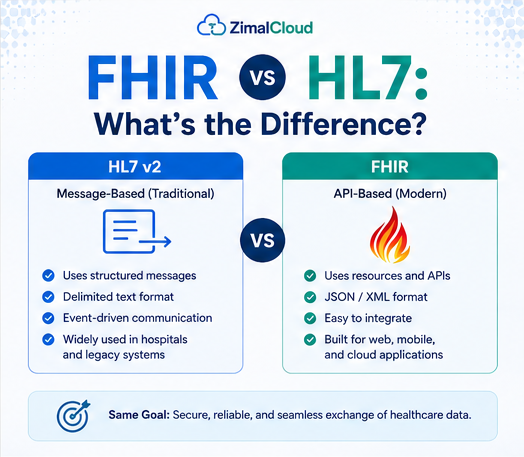
FHIR and HL7 are two important healthcare interoperability standards. HL7 v2 uses message-based communication and remains widely used by hospitals and legacy systems, while FHIR uses modern resources, APIs, JSON, and web technologies. Learn how they differ, where each is used, and how healthcare organizations can use both to build connected digital health ecosystems.

Read insight
ai-in-medical-billing-opportunities-and-challenges-card

AI in Medical Billing: Opportunities and Challenges

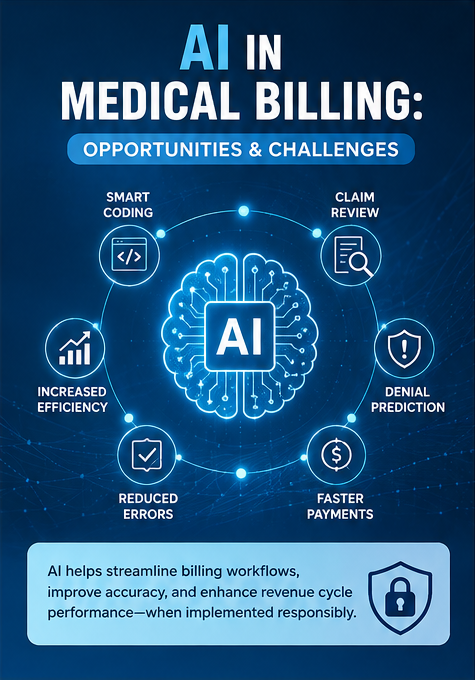
AI is transforming medical billing by automating repetitive tasks, supporting coding, improving claims accuracy, predicting denials, and streamlining revenue cycle workflows. While these benefits can improve efficiency and reduce administrative costs, healthcare organizations must address privacy, compliance, integration, accuracy, and human oversight to use AI responsibly and effectively.

Read insight
hipaa-compliant-cloud-software-what-should-providers-look-for
Healthcare technology

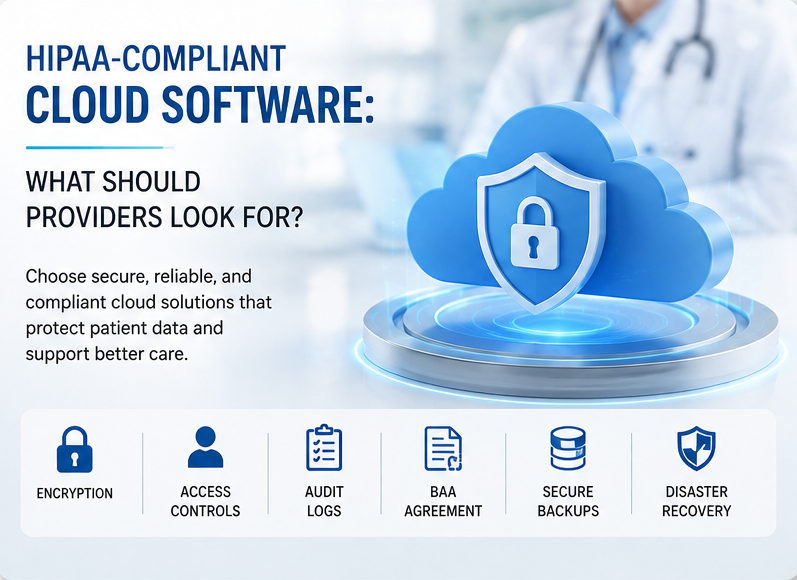
HIPAA-Compliant Cloud Software: What Should Providers Look For?

HIPAA-compliant cloud software helps healthcare providers securely manage PHI while supporting modern workflows. Learn what to evaluate before choosing a platform, including encryption, access controls, MFA, audit logs, BAAs, backups, disaster recovery, data portability, vendor security, and incident response. The right solution balances security, compliance, reliability, and everyday usability.

Read insight
what-is-principal-care-management-pcm-card
Care management

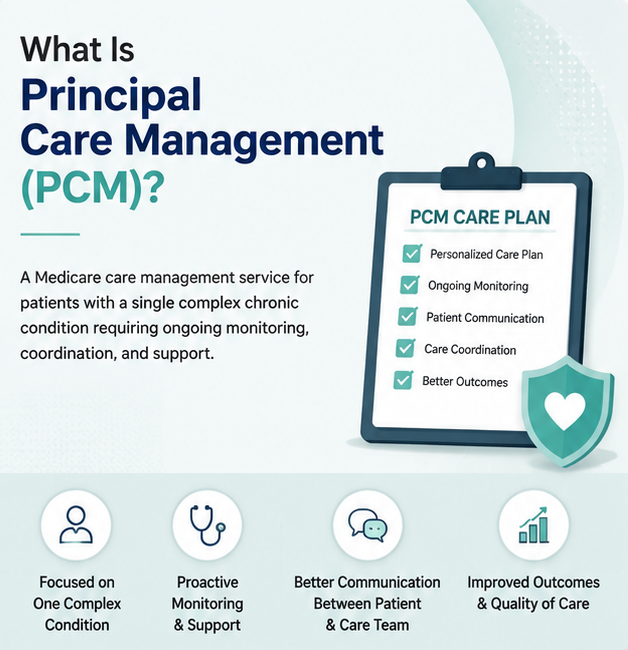
What Is Principal Care Management (PCM)?

Principal Care Management (PCM) provides focused, ongoing support for patients with a single complex chronic condition. Through personalized care plans, regular monitoring, patient communication, and care coordination, PCM helps healthcare teams manage disease more proactively, improve continuity of care, and support better patient outcomes between routine appointments

Read insight
how-ccm-software-helps-manage-chronic-conditions-card
Care management

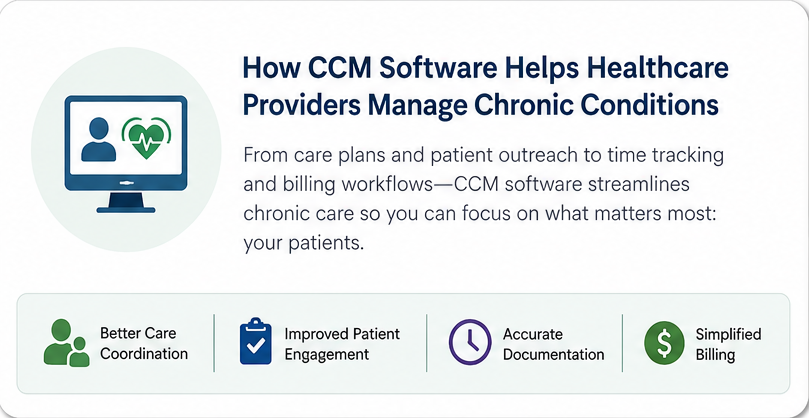
How CCM Software Helps Healthcare Providers Manage Chronic Conditions

CCM software helps healthcare providers manage chronic conditions through centralized care plans, patient outreach, medication tracking, task automation, documentation, time tracking, and care coordination. By connecting clinical activities with reporting and billing workflows, CCM technology enables more organized, proactive, and continuous care while reducing administrative workload.

Read insight
what-is-remote-patient-monitoring-rpm-card
Care management

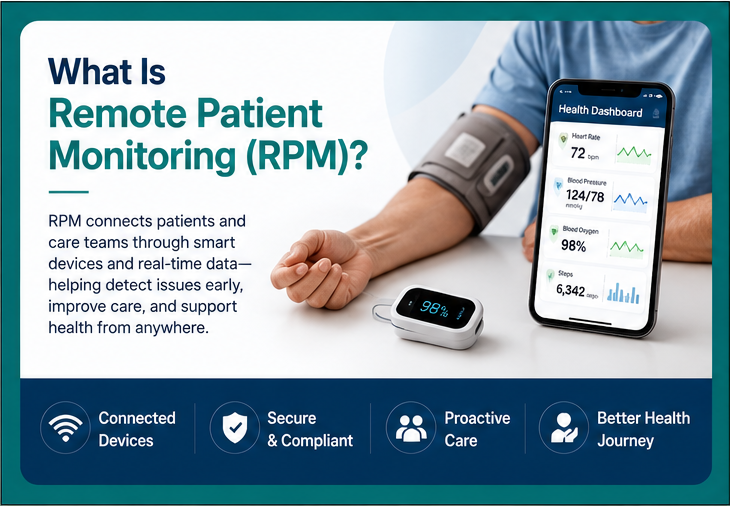
What Is Remote Patient Monitoring (RPM)?

Remote Patient Monitoring (RPM) allows healthcare providers to monitor patients' health data from outside a traditional clinical setting. Using connected devices and digital technology, RPM can collect vital signs, share information with care teams, identify changes early, and support timely interventions—helping patients stay connected to care from the comfort of home.

Read insight
what-is-healthcare-interoperability-card
Healthcare technology

What Is Healthcare Interoperability?

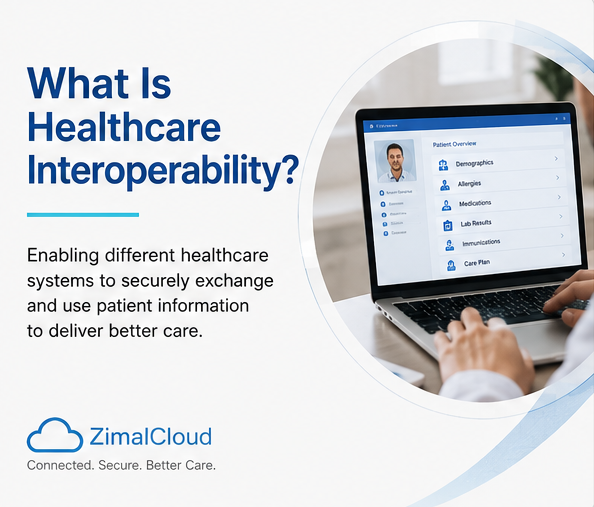
Healthcare interoperability enables different healthcare systems, EHRs, providers, laboratories, pharmacies, and other organizations to securely exchange and use patient information. By using standards such as FHIR, HL7, and USCDI, interoperability reduces data silos, minimizes duplicate work, improves care coordination, and supports more connected, efficient, patient-centered healthcare.

Read insight
ccm-billing-cpt-codes-requirements-and-workflow-banner
Care management

CCM Billing: CPT Codes, Requirements, and Workflow

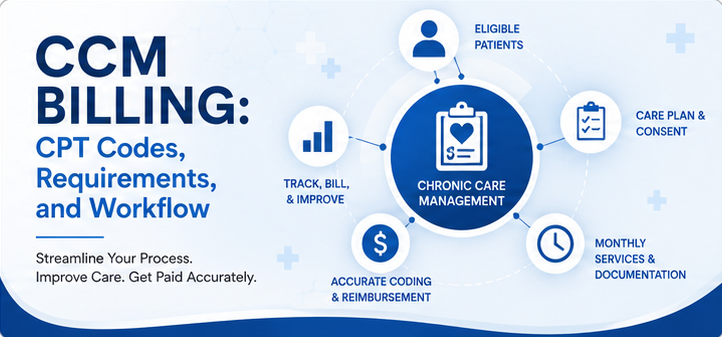
CCM billing helps healthcare practices receive reimbursement for coordinating care for eligible patients with multiple chronic conditions. This guide explains key CPT codes, patient eligibility, consent, care-plan and documentation requirements, monthly time thresholds, and a practical billing workflow. Learn how to build a consistent CCM process while supporting better care and accurate claims.

Read insight