ZimalCloud insights

Ideas that move healthcare practices forward

Practical guidance on care programs, practice operations, healthcare technology, and sustainable growth.

Latest insights

what-is-an-edi-835-era-card

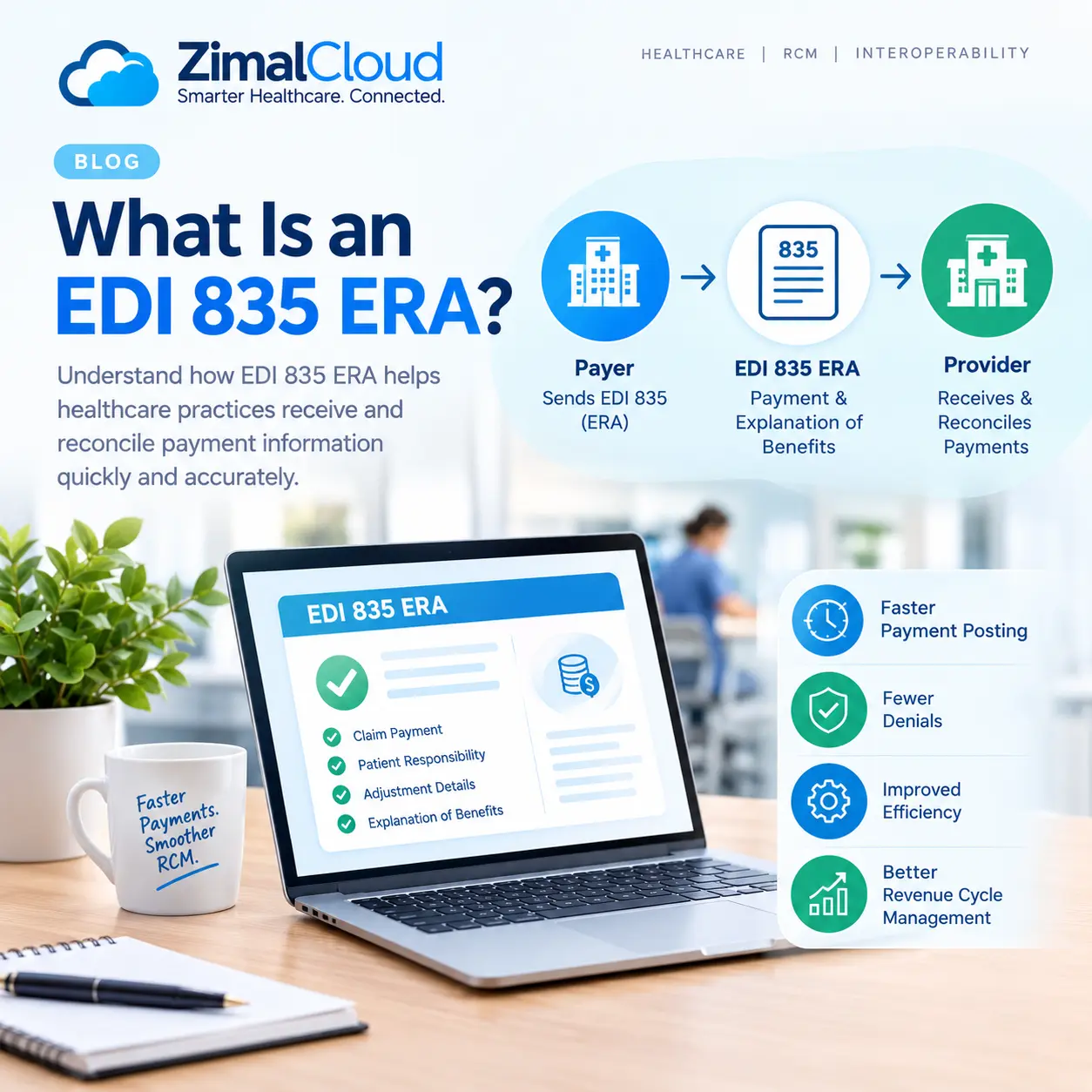
What Is an EDI 835 ERA?

An EDI 835 ERA is an electronic remittance transaction used by healthcare payers to communicate claim payment and adjustment details to providers. Learn how 835 files work, what information they contain, how they differ from 837 claims, and how ERA integration can automate payment posting and improve medical billing workflows.

Read insight
practice-management-vs-ehr-what-is-the-difference-card
Healthcare technology

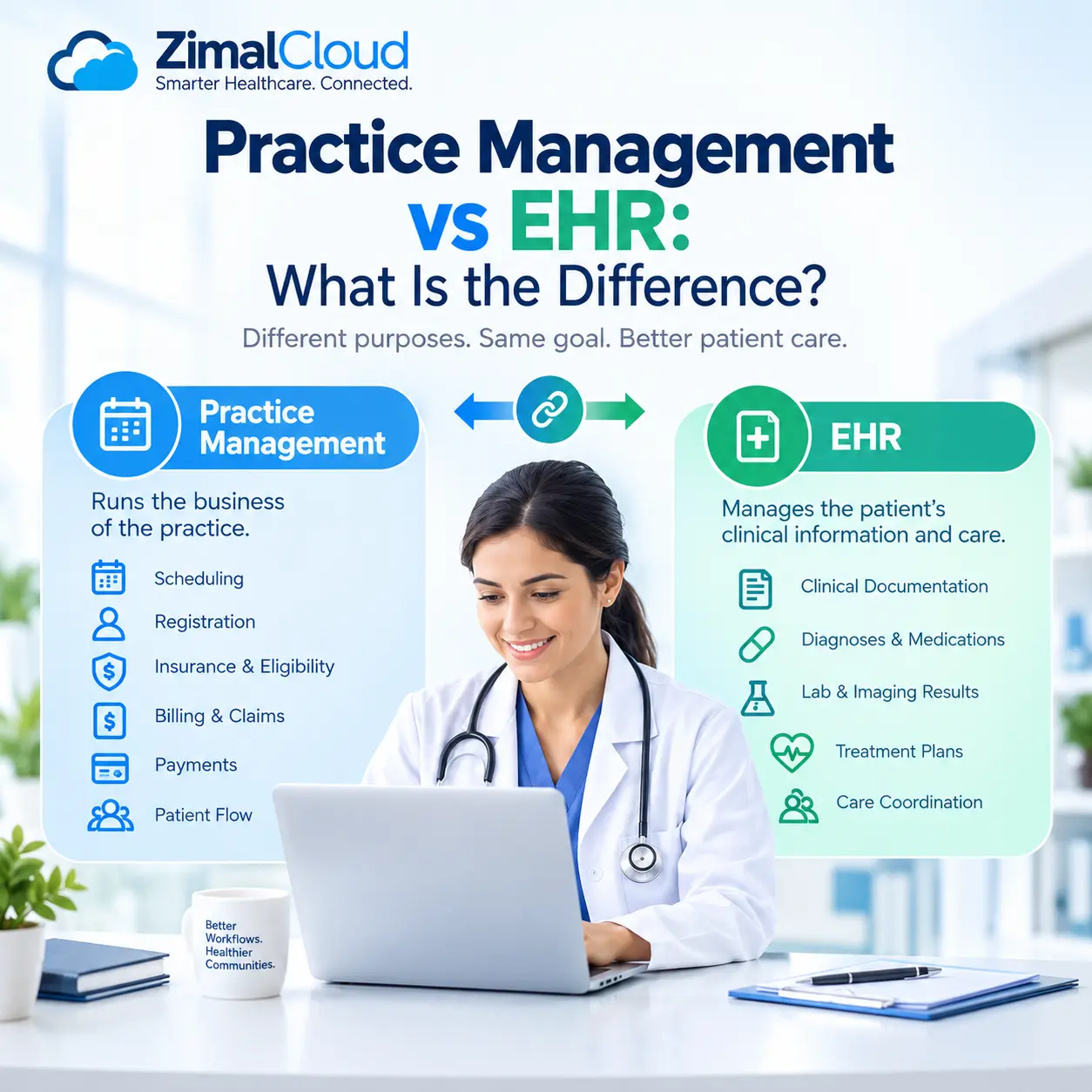
Practice Management vs EHR: What Is the Difference?

Practice Management and EHR systems play different but complementary roles in healthcare. PM software manages scheduling, registration, billing, claims, and administrative operations, while EHRs manage clinical records, documentation, diagnoses, medications, and care plans. Understanding how these systems differ— how they work together—can help practices build more efficient, connected workflows.

Read insight
rpm-vs-telehealth-understanding-the-difference-card
Healthcare technology

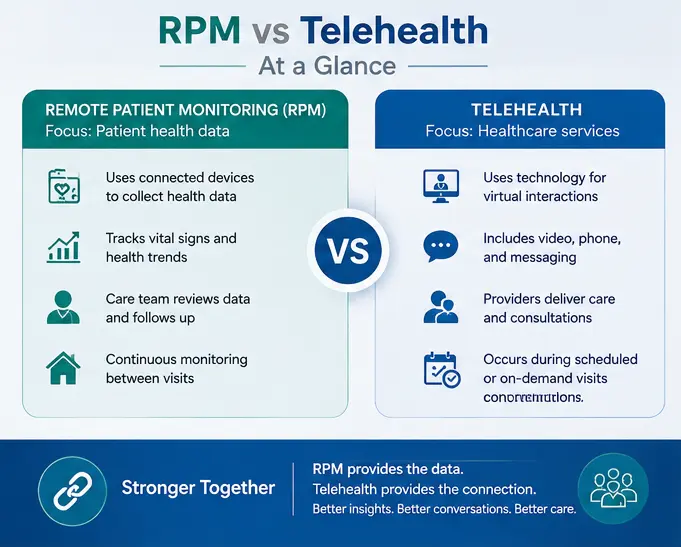
RPM vs Telehealth: Understanding the Difference

RPM and telehealth both bring healthcare beyond the traditional clinic, but they serve different purposes. Remote Patient Monitoring uses connected devices to collect and review patient health data, while telehealth enables remote consultations, communication, and care delivery. Learn how RPM and telehealth differ, how they can work together, and when each approach benefit patients and providers.

Read insight
10-essential-features-every-modern-practice-management-system-card
Healthcare technology

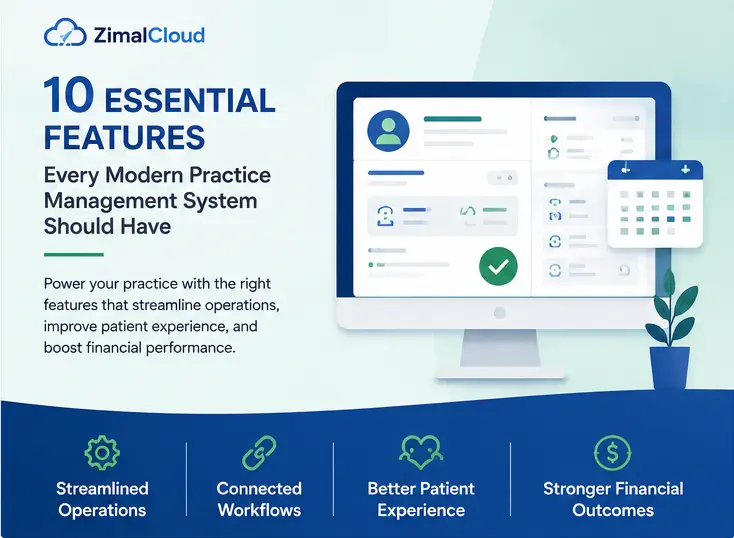
10 Essential Features Every Modern Practice Management System Should Have

A modern Practice Management System can streamline everything from scheduling and patient registration to billing, claims, communication, analytics, and security. This guide explores 10 essential features practices should look for, including automation, interoperability, revenue-cycle management, workflow tools, and secure access—all designed to create a more connected and efficient practice.

Read insight
ccm-vs-rpm-what-s-the-difference-card
Care management

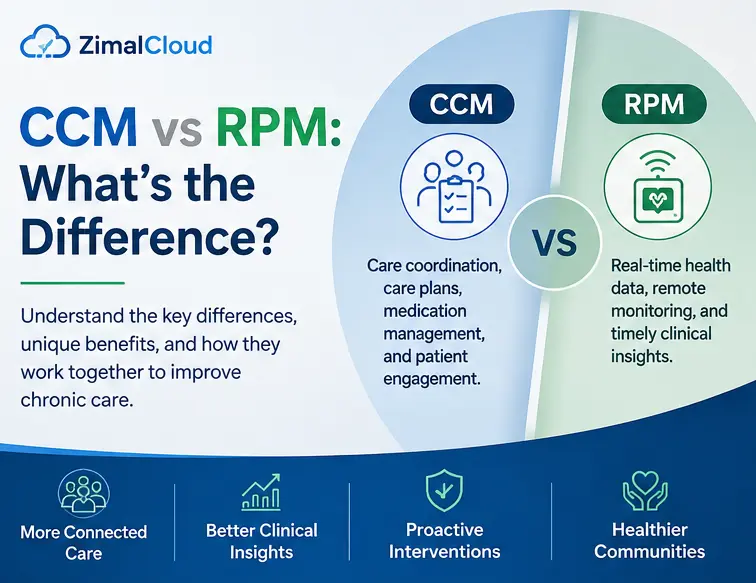
CCM vs RPM: What’s the Difference?

CCM and RPM both support patients beyond traditional office visits, but they serve different purposes. CCM focuses on comprehensive chronic care coordination, while RPM uses connected devices to collect and monitor physiological data remotely. Understanding their differences—and how they can work together—can help practices build more connected and effective chronic care programs.

Read insight
what-is-practice-management-software-a-complete-guide-for-medical-practices-card
Healthcare technology

What Is Practice Management Software? A Complete Guide for Medical Practices

Practice Management Software helps medical practices manage the administrative and financial side of healthcare. From patient registration and appointment scheduling to insurance verification, claims, payments, and reporting, PMS connects essential workflows in one system. Learn how practice management software works, its key features, benefits, and what to consider when choosing a solution.

Read insight
pcm-vs-ccm-what-s-the-difference-card
Care management

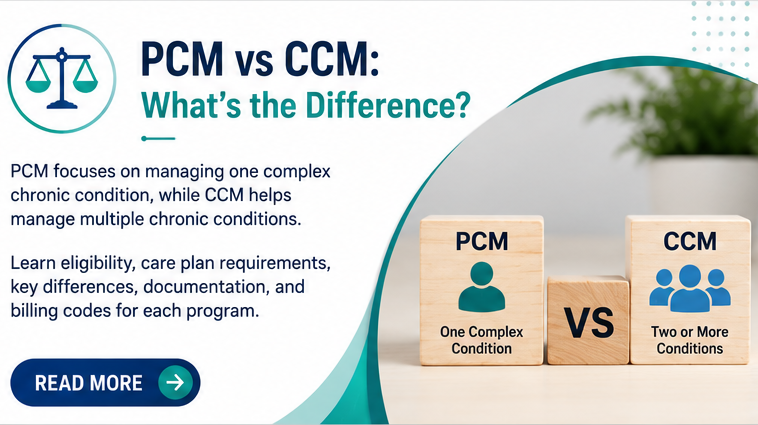
PCM vs CCM: What's the Difference?

PCM and CCM are Medicare care-management services designed to support patients with chronic conditions, but they serve different clinical needs. CCM generally coordinates care for patients with two or more chronic conditions, while PCM focuses on one complex, high-risk chronic condition. Understanding the difference helps practices choose appropriate workflows, documentation, and billing process.

Read insight
gi-medical-billing-common-challenges-and-solutions-card
Gastroenterology

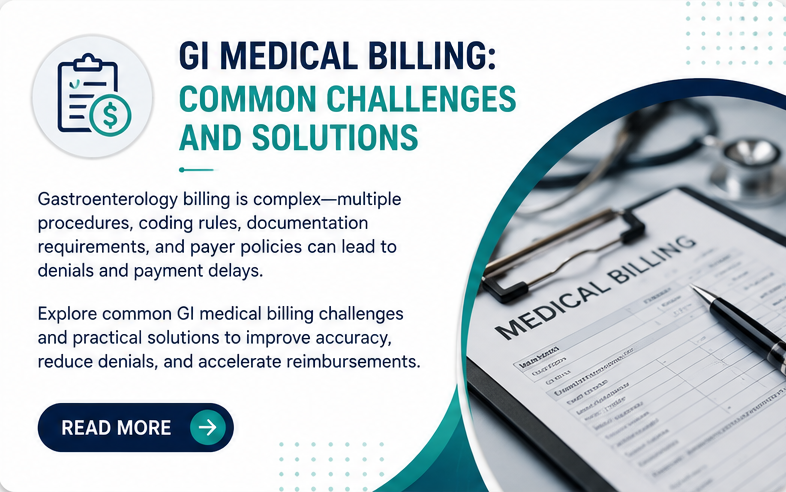
GI Medical Billing: Common Challenges and Solutions

Gastroenterology billing can be complex due to specialized procedures, coding requirements, documentation rules, insurance policies, and claim denials. This guide explores common GI medical billing challenges and practical solutions to improve coding accuracy, reduce rejected claims, accelerate reimbursements, and create a more efficient revenue cycle for gastroenterology practices.

Read insight
fhir-vs-hl7-what-s-the-difference-card
Healthcare technology

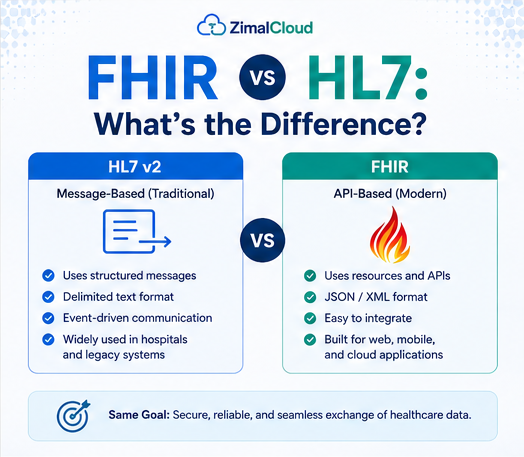
FHIR vs HL7: What’s the Difference?

FHIR and HL7 are two important healthcare interoperability standards. HL7 v2 uses message-based communication and remains widely used by hospitals and legacy systems, while FHIR uses modern resources, APIs, JSON, and web technologies. Learn how they differ, where each is used, and how healthcare organizations can use both to build connected digital health ecosystems.

Read insight