What Is Therapy? Types of Mental Health Therapy Explained
Therapy is a structured form of professional support that helps people understand their thoughts, emotions, behaviors, and relationships. Different types of mental health therapy can address anxiety, depression, trauma, stress, relationship concerns, and other challenges. Learn how therapy works, explore common approaches, and understand how to choose the right type of support.
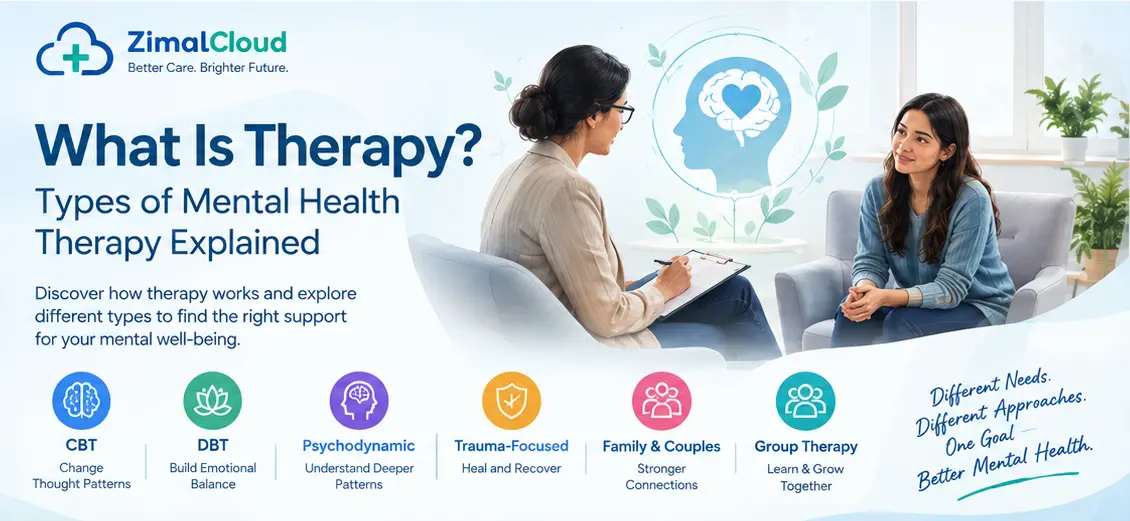
Table of contents
- Introduction
- What Is Therapy?
- How Does Mental Health Therapy Work?
- Common Types of Mental Health Therapy
- 1. Cognitive Behavioral Therapy (CBT)
- 2. Dialectical Behavior Therapy (DBT)
- 3. Psychodynamic Therapy
- 4. Humanistic Therapy
- 5. Acceptance and Commitment Therapy (ACT)
- 6. Exposure Therapy
- 7. Trauma-Focused Therapy
- 8. Family Therapy
- 9. Couples Therapy
- 10. Group Therapy
- Therapy vs. Counseling: What's the Difference?
- Who Can Provide Mental Health Therapy?
- When Should Someone Consider Therapy?
- How to Choose the Right Type of Therapy
- 1. Your Main Concern
- 2. The Therapist's Qualifications
- 3. Treatment Approach
- 4. Comfort and Trust
- 5. Treatment Goals
- Can Therapy Be Combined With Medication?
- What Can You Expect During a Therapy Session?
- Final Thoughts
Introduction
Mental health affects how we think, feel, behave, communicate, and respond to everyday challenges. At different points in life, people may experience stress, anxiety, depression, grief, relationship difficulties, trauma, or other emotional concerns.
Therapy, also called psychotherapy or counseling, provides a structured and confidential environment where a person can work with a trained mental health professional to understand these challenges and develop healthier ways of coping.
Therapy is not only for people experiencing severe mental health conditions. It can also help people manage everyday stress, improve relationships, build confidence, and develop better emotional skills.
What Is Therapy?
Therapy is a professional process in which a trained mental health provider works with an individual, couple, family, or group to address emotional, behavioral, or psychological concerns.
Depending on the person's needs, therapy may focus on:
- Understanding thoughts and emotions
- Changing unhealthy behavior patterns
- Managing anxiety and stress
- Treating depression
- Processing trauma or difficult experiences
- Improving relationships
- Developing coping skills
- Building emotional resilience
- Improving communication
- Managing life transitions
Therapy can involve talking, structured exercises, behavioral techniques, assessments, goal setting, and other evidence-based approaches.
How Does Mental Health Therapy Work?
Although every therapy experience is different, treatment commonly begins with an assessment of the person's concerns, history, symptoms, goals, and current circumstances.
A therapist may then work with the individual to:
- Identify concerns – Understand what is causing distress or affecting daily life.
- Set treatment goals – Establish what the person wants to improve.
- Choose an appropriate approach – Select therapy techniques based on the person's needs.
- Develop coping strategies – Learn practical ways to manage thoughts, emotions, and behaviors.
- Track progress – Review changes over time and adjust treatment when needed.
The number and frequency of sessions can vary depending on the person's situation and treatment plan.
Common Types of Mental Health Therapy
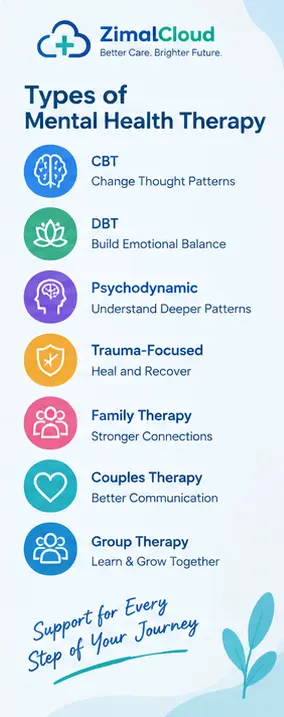
There are many forms of psychotherapy. Some of the most commonly used approaches include the following.
1. Cognitive Behavioral Therapy (CBT)
Cognitive Behavioral Therapy (CBT) focuses on the relationship between thoughts, feelings, and behaviors.
For example, a person may have negative thoughts that increase anxiety or lead to avoidance. CBT helps identify these patterns and develop healthier ways of thinking and responding.
CBT is commonly used for:
- Anxiety
- Depression
- Panic symptoms
- Phobias
- Stress
- Some trauma-related concerns
2. Dialectical Behavior Therapy (DBT)
Dialectical Behavior Therapy (DBT) combines behavioral strategies with skills for emotional regulation and acceptance.
DBT commonly teaches skills related to:
- Emotional regulation
- Distress tolerance
- Mindfulness
- Interpersonal effectiveness
It may be particularly helpful for people who experience intense emotions, impulsive behaviors, or difficulties maintaining relationships.
3. Psychodynamic Therapy
Psychodynamic therapy explores how past experiences, relationships, emotions, and unconscious patterns may influence current thoughts and behaviors.
It can help people develop greater awareness of recurring emotional or relationship patterns.
This approach may be useful for people who want to understand the deeper causes of ongoing emotional difficulties.
4. Humanistic Therapy
Humanistic therapy emphasizes personal growth, self-awareness, free choice, and developing a stronger understanding of oneself.
The therapist provides a supportive environment where individuals can explore their feelings and experiences.
Common approaches include:
- Person-centered therapy
- Gestalt therapy
- Existential therapy
5. Acceptance and Commitment Therapy (ACT)
Acceptance and Commitment Therapy (ACT) helps people develop psychological flexibility by learning to accept difficult thoughts and emotions while taking actions consistent with their personal values.
Rather than trying to eliminate every uncomfortable thought or feeling, ACT focuses on changing how a person responds to them.
6. Exposure Therapy
Exposure therapy is often used for anxiety-related conditions, phobias, and certain trauma-related concerns.
Under professional guidance, a person gradually and safely encounters feared situations, memories, or sensations instead of continually avoiding them.
The goal is to reduce fear and avoidance and improve the person's ability to cope.
7. Trauma-Focused Therapy
Trauma-focused therapies are designed to help people process and recover from traumatic experiences.
Depending on the individual and clinical situation, approaches may include specific evidence-based trauma treatments such as trauma-focused CBT or EMDR.
Treatment should be appropriately tailored to the person's history, symptoms, and safety needs.
8. Family Therapy
Family therapy involves family members working with a therapist to improve communication, understand patterns, and address challenges affecting the family.
It may be useful when mental health concerns affect relationships or when family dynamics contribute to ongoing difficulties.
9. Couples Therapy
Couples therapy helps partners address relationship concerns with the support of a trained therapist.
Common topics include:
- Communication problems
- Trust issues
- Conflict
- Emotional disconnection
- Major life changes
- Relationship expectations
10. Group Therapy
Group therapy brings several people with related concerns together with one or more trained mental health professionals.
It can provide opportunities to:
- Learn from others
- Practice communication skills
- Develop coping strategies
- Reduce feelings of isolation
- Receive professional guidance in a group setting
Therapy vs. Counseling: What's the Difference?
The terms therapy and counseling are sometimes used interchangeably, and the exact distinction can vary depending on the provider, profession, and location.
Generally, counseling may focus more on specific current concerns, life challenges, or adjustment issues, while psychotherapy can involve broader or longer-term work with emotional, behavioral, and psychological concerns.
The most important factor is whether the professional's training and approach are appropriate for the person's needs.
Who Can Provide Mental Health Therapy?
Mental health services may be provided by different licensed or qualified professionals depending on the healthcare system and local regulations.
These can include:
- Psychologists
- Licensed professional counselors
- Clinical social workers
- Marriage and family therapists
- Psychiatrists
- Other appropriately trained mental health professionals
A psychiatrist is a medical doctor who can evaluate mental health conditions and, where appropriate, prescribe medication. Some psychiatrists also provide psychotherapy.
When Should Someone Consider Therapy?
Therapy may be worth considering when emotional or behavioral difficulties begin interfering with everyday life.
Possible signs include:
- Persistent sadness or worry
- Difficulty managing stress
- Significant changes in sleep or appetite
- Problems concentrating
- Relationship difficulties
- Frequent anger or emotional distress
- Loss or grief that feels difficult to manage
- Trauma-related symptoms
- Avoiding activities because of fear or anxiety
- Difficulty functioning at work, school, or home
You do not necessarily need to wait until symptoms become severe before seeking professional support.
How to Choose the Right Type of Therapy

There is no single therapy approach that works for everyone. The appropriate option depends on the person's concerns, goals, preferences, history, and clinical assessment.
When choosing a therapist or treatment approach, consider:
1. Your Main Concern
Identify what you want help with, such as anxiety, depression, trauma, relationships, or stress.
2. The Therapist's Qualifications
Check that the professional has appropriate education, training, and licensing or credentials for the services they provide.
3. Treatment Approach
Ask which therapy methods the provider uses and why they may be appropriate for your situation.
4. Comfort and Trust
A strong therapeutic relationship can be important. You should feel able to communicate openly and respectfully with your therapist.
5. Treatment Goals
Discuss what you hope to achieve and how progress will be evaluated.
Can Therapy Be Combined With Medication?
Yes. Depending on the condition and individual circumstances, therapy may be used alone or alongside medication.
For some people, psychotherapy provides the primary treatment. Others may benefit from a combination of psychotherapy and medication managed by an appropriate healthcare professional.
Treatment decisions should be individualized rather than based solely on a diagnosis or symptom list.
What Can You Expect During a Therapy Session?
A typical session may include discussion of:
- Current feelings and concerns
- Recent events
- Symptoms and behaviors
- Progress toward treatment goals
- Coping strategies
- Relationships or other relevant circumstances
- Exercises or techniques related to the chosen therapy approach
The therapist may also provide practical exercises or activities to use between sessions.
Therapy is a collaborative process. You should be able to ask questions about your treatment and discuss concerns about your progress.
Final Thoughts
Therapy can provide professional support for people experiencing emotional, behavioral, relationship, or psychological challenges. From CBT and DBT to psychodynamic, family, couples, group, and trauma-focused therapies, different approaches serve different purposes.
The right treatment depends on the individual's needs, goals, circumstances, and professional assessment. Seeking therapy is not a sign of weakness—it can be an important step toward better emotional health and improved quality of life.
If someone is experiencing an immediate mental health crisis or believes they may be in danger, they should seek emergency or crisis support in their area rather than relying on a blog or online resource.
FAQ
Frequently asked questions
What is therapy?
Therapy is a professional process that helps people understand and manage emotional, behavioral, psychological, or relationship concerns. A trained mental health professional works with the individual to develop healthier coping strategies and achieve treatment goals.
What are the common types of mental health therapy?
Common types of mental health therapy include Cognitive Behavioral Therapy (CBT), Dialectical Behavior Therapy (DBT), psychodynamic therapy, humanistic therapy, Acceptance and Commitment Therapy (ACT), exposure therapy, trauma-focused therapy, family therapy, couples therapy, and group therapy.
What is Cognitive Behavioral Therapy (CBT)?
Cognitive Behavioral Therapy (CBT) focuses on the connection between thoughts, feelings, and behaviors. It helps people identify unhelpful thought patterns and develop healthier ways of thinking and responding.
What is Dialectical Behavior Therapy (DBT)?
Dialectical Behavior Therapy (DBT) is a structured therapy approach that teaches skills for emotional regulation, distress tolerance, mindfulness, and interpersonal effectiveness.
Who can benefit from therapy?
People experiencing anxiety, depression, stress, grief, trauma-related concerns, relationship difficulties, emotional distress, or life changes may benefit from therapy. Therapy can also support personal growth and improve coping skills.
How do I choose the right type of therapy?
The right type of therapy depends on your concerns, treatment goals, preferences, history, and professional assessment. A qualified mental health professional can help determine which therapeutic approach may be appropriate.
Can therapy be combined with medication?
Yes. Depending on the person's condition and circumstances, therapy may be used alone or together with medication. Treatment should be individualized and discussed with an appropriately qualified healthcare professional.
What happens during a therapy session?
A therapy session may involve discussing current concerns, emotions, symptoms, relationships, behaviors, and progress toward treatment goals. Depending on the therapy approach, the therapist may also introduce exercises, coping strategies, or activities to practice between sessions.
When should someone consider therapy?
Someone may consider therapy when emotional or behavioral difficulties begin affecting daily life, relationships, work, school, or overall well-being. Examples include persistent sadness or worry, difficulty managing stress, trauma-related symptoms, or ongoing relationship difficulties.
Is therapy only for people with mental health disorders?
No. Therapy is not limited to diagnosed mental health disorders. People may also seek therapy to manage stress, cope with life transitions, improve relationships, develop emotional skills, increase self-awareness, or work toward personal goals.