Bipolar Disorder: Symptoms, Types & Treatment Options
Bipolar disorder causes intense shifts in mood, energy, and activity that go well beyond ordinary ups and downs. Learn the symptoms of mania and depression, how Bipolar I, Bipolar II, and cyclothymia differ, and which treatments help people achieve lasting stability.
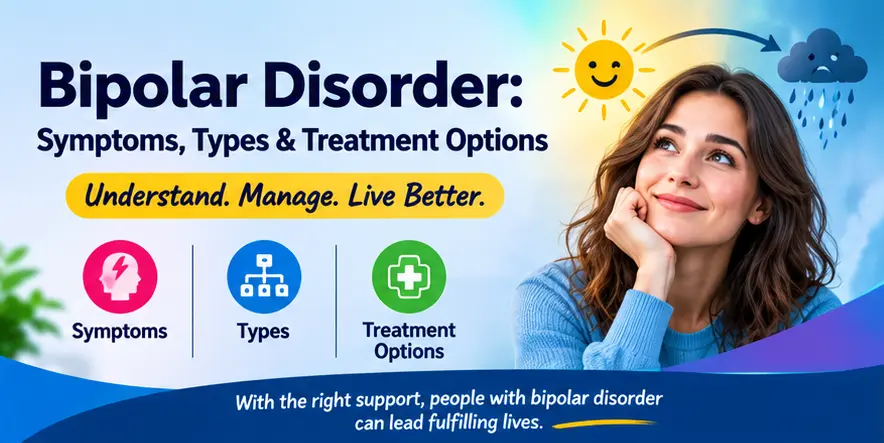
Table of contents
- What Is Bipolar Disorder?
- Symptoms of Bipolar Disorder
- Signs of a Manic or Hypomanic Episode
- Signs of Bipolar Depression
- Types of Bipolar Disorder
- Bipolar I Disorder
- Bipolar II Disorder
- Cyclothymic Disorder (Cyclothymia)
- Other Specified and Unspecified Bipolar Disorders
- Bipolar I vs. Bipolar II: Key Differences
- What Causes Bipolar Disorder?
- How Is Bipolar Disorder Diagnosed?
- Bipolar Disorder Treatment Options
- Medication
- Psychotherapy
- Brain Stimulation Therapies
- Lifestyle and Self-Management
- When to Seek Help
- Take the Next Step
Everyone has good days and bad days. But if your moods swing between extreme highs and crushing lows that disrupt work, relationships, and daily life, it may be more than stress. It could be bipolar disorder, a treatable mental health condition that affects roughly 2.8% of U.S. adults in any given year, according to the National Institute of Mental Health.
This guide explains the symptoms of bipolar disorder, the main types, how it is diagnosed, and the treatment options that help people live stable, fulfilling lives.
What Is Bipolar Disorder?
Bipolar disorder (formerly called manic depression) is a mood disorder marked by extreme shifts in mood, energy, activity levels, and concentration. These shifts are called mood episodes, and they are more intense and longer-lasting than typical mood changes.
Episodes generally fall into three categories:
- Manic episodes: unusually elevated, energized, or irritable mood
- Hypomanic episodes: a milder form of mania that doesn’t cause severe impairment
- Depressive episodes: persistent sadness, emptiness, or loss of interest
Between episodes, many people feel like themselves and function normally.
Symptoms of Bipolar Disorder
Symptoms depend on which type of episode a person is experiencing.
Signs of a Manic or Hypomanic Episode
- Feeling unusually “high,” euphoric, or wired
- Decreased need for sleep (feeling rested after only 2–3 hours)
- Racing thoughts and rapid, pressured speech
- Inflated self-confidence or grandiose ideas
- Impulsive behavior, such as overspending, risky sex, or reckless driving
- Being easily distracted
- Increased irritability or agitation
A manic episode lasts at least one week (or any length if hospitalization is needed). A hypomanic episode lasts at least four days.
Signs of Bipolar Depression
- Persistent sadness, hopelessness, or emptiness
- Loss of interest in activities once enjoyed
- Fatigue and low energy
- Changes in appetite or weight
- Sleeping too much or too little
- Trouble concentrating or making decisions
- Feelings of worthlessness or guilt
- Thoughts of death or suicide
Depressive episodes typically last at least two weeks. Many people with bipolar disorder spend more time in depression than in mania, which is one reason the condition is often misdiagnosed as major depression.
Types of Bipolar Disorder
Bipolar I Disorder
Bipolar I is defined by at least one full manic episode. Depressive episodes are common but not required for diagnosis. Mania in Bipolar I can be severe and may involve psychosis (such as delusions or hallucinations), often requiring hospital care.
Bipolar II Disorder
Bipolar II involves at least one hypomanic episode and at least one major depressive episode, but no full manic episode. Bipolar II is not a “milder” form of Bipolar I. The depressive episodes can be long, disabling, and difficult to treat.
Cyclothymic Disorder (Cyclothymia)
Cyclothymia involves numerous periods of hypomanic and depressive symptoms lasting at least two years in adults (one year in children and teens). The symptoms don’t meet the full criteria for a hypomanic or depressive episode, but they still cause distress and impairment.
Other Specified and Unspecified Bipolar Disorders
Some people have bipolar symptoms that don’t fit the categories above. These may include substance-induced or medical-condition-related mood episodes, and they still warrant professional care.
Bipolar I vs. Bipolar II: Key Differences
| Feature | Bipolar I | Bipolar II |
|---|---|---|
| Full manic episode | Yes (required) | No |
| Hypomanic episode | Possible | Yes (required) |
| Major depressive episode | Common | Yes (required) |
| Hospitalization risk | Higher | Lower, though depression can be severe |
What Causes Bipolar Disorder?
There is no single cause. Research points to a combination of factors:
- Genetics: Having a parent or sibling with bipolar disorder significantly raises risk.
- Brain structure and chemistry: Differences in neurotransmitter function and brain circuits are linked to mood regulation.
- Environmental triggers: Major stress, trauma, sleep disruption, and substance use can trigger episodes in people who are vulnerable.
How Is Bipolar Disorder Diagnosed?
There is no blood test or scan that diagnoses bipolar disorder. A psychiatrist or qualified mental health provider will typically:
- Conduct a detailed clinical interview about symptoms, history, and family background
- Review mood patterns over time, sometimes using a mood diary
- Rule out medical causes, such as thyroid problems, and the effects of substances or medications
- Apply criteria from the DSM-5-TR
Because bipolar disorder is often mistaken for depression, ADHD, or anxiety, it can take years to receive an accurate diagnosis. Sharing past episodes of elevated mood, even if you didn’t see them as a problem, helps your provider make the right call.
Bipolar Disorder Treatment Options
Bipolar disorder is a lifelong condition, but it is highly treatable. Most people do best with a combination of approaches.
Medication
- Mood stabilizers: such as lithium and valproate, used to prevent and manage manic and depressive episodes
- Atypical antipsychotics: such as quetiapine, lurasidone, or cariprazine, used for mania, depression, or maintenance
- Antidepressants: sometimes used with caution and usually alongside a mood stabilizer, since they can trigger mania in some people
Medication choices are highly individual. Never start or stop medication without your prescriber’s guidance.
Psychotherapy
- Cognitive Behavioral Therapy (CBT): helps identify and change unhelpful thought patterns
- Interpersonal and Social Rhythm Therapy (IPSRT): stabilizes daily routines and sleep, which are key mood triggers
- Family-focused therapy: educates and supports loved ones
- Psychoeducation: teaches people to recognize early warning signs of an episode
Brain Stimulation Therapies
For severe or treatment-resistant episodes, options may include electroconvulsive therapy (ECT) or transcranial magnetic stimulation (TMS).
Lifestyle and Self-Management
- Keep a consistent sleep schedule
- Avoid alcohol and recreational drugs
- Exercise regularly and manage stress
- Track your mood daily
- Build a support network and make a written relapse-prevention plan
When to Seek Help
Reach out to a healthcare provider if you or someone you love experiences:
- Mood swings that interfere with work, school, or relationships
- Several days of very little sleep with high energy
- Risky or out-of-character behavior
- Depression that doesn’t lift
If you or someone you know is in crisis or having thoughts of suicide, call or text 988 (Suicide & Crisis Lifeline in the U.S.), or go to the nearest emergency room.
Take the Next Step
Living with untreated bipolar disorder can feel exhausting and unpredictable, but you don’t have to manage it alone. An accurate diagnosis and a personalized treatment plan can make a profound difference. Schedule a consultation with our team at [Practice Name] today to begin your path toward stability and well-being.
Let’s have a 15-minute demo and see what you’re missing
Live visit workflows built around your mix of evals, therapy, and med management, with accurate codes and a ready-to-send PDF.
- Template-driven visits: eval, meds, therapy, crisis, group.
- Face-to-face timer pauses on documentation pages.
- Timer minutes feed the progress note and CPT.
- MSE, risk, safety plan, goals, and follow-up in one path.
- MH and BHI billing kept separate, never auto-mixed.
- Review & Sign on one hub with CCM, BHI, PCM, and PM.
See features and workflows on Mental Health EHR Software.
This launch offer has ended.
FAQ
Frequently asked questions
Can bipolar disorder be cured?
There is no cure, but with consistent treatment, many people achieve long periods of stability and lead full lives.
What is the difference between bipolar disorder and depression?
Depression involves only low moods. Bipolar disorder includes depressive episodes plus episodes of mania or hypomania.
What age does bipolar disorder usually start?
It often emerges in late adolescence or early adulthood, though it can appear at any age.
Is bipolar disorder hereditary?
Genetics play a major role, but having a relative with the condition doesn't mean you will develop it.
Can you live a normal life with bipolar disorder?
Yes. With the right treatment plan and support, people with bipolar disorder build successful careers, relationships, and families.