Why Behavioral Health Integration Belongs in the Same Platform as Your EHR — A Look at ZimalCloud BHI
Behavioral Health Integration (BHI) works best when clinical workflows are connected. Discover how integrating BHI with your EHR can help organize patient records, simplify documentation, coordinate care teams, track follow-ups, and reduce administrative complexity. Explore how ZimalCloud BHI supports structured behavioral health workflows within a connected healthcare technology platform.
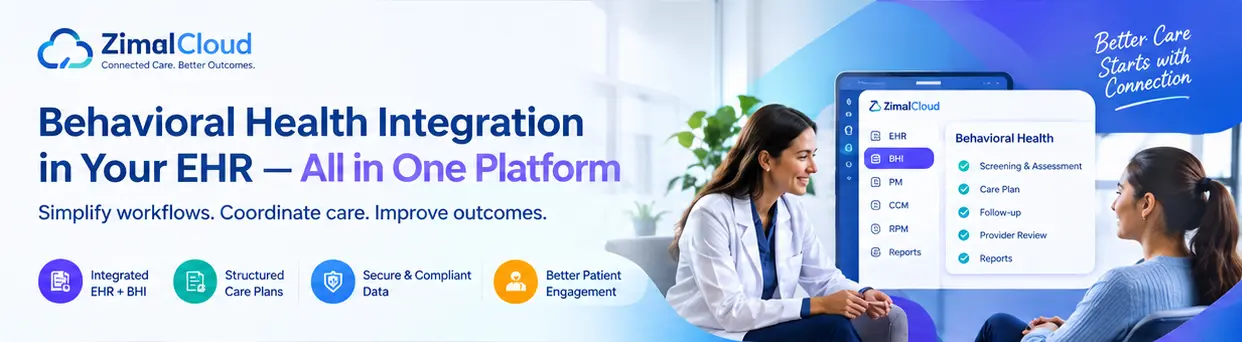
Table of contents
- Introduction
- What Is Behavioral Health Integration (BHI)?
- Why Should BHI Be Connected to Your EHR?
- 1. Keep Patient Information More Organized
- 2. Reduce Administrative Work and Repeated Data Entry
- 3. Support Coordinated Care Team Communication
- 4. Standardize Behavioral Health Documentation
- 5. Improve Follow-Up and Workflow Visibility
- 6. Support More Consistent Program Oversight
- The Challenges of Managing BHI Outside Your EHR
- How ZimalCloud BHI Supports Connected Behavioral Health Workflows
- Structured Care Planning
- Screening and Assessment Support
- Follow-Up and Care Coordination
- Time Tracking and Documentation
- Provider Review and Sign-Off
- Connected Healthcare Workflows
- Why a Connected BHI and EHR Workflow Matters for Practice Efficiency
- Security and Privacy Must Remain a Priority
- How to Choose the Right BHI Platform
- Conclusion: Bring Behavioral Health Workflows Closer to the Patient Record
Introduction
Behavioral health is an essential part of whole-person care. Patients may need support for emotional well-being, mental health concerns, and behavioral challenges alongside treatment for physical health conditions. However, when behavioral health workflows operate separately from a medical practice's Electronic Health Record (EHR), managing patient information and coordinating care can become more complicated.
Separate systems may lead to fragmented documentation, repeated data entry, disconnected workflows, and additional administrative work for healthcare teams.
Behavioral Health Integration (BHI) within an EHR-connected platform offers a more coordinated approach. By bringing behavioral health workflows closer to the patient's broader healthcare record, practices can improve documentation consistency, support communication among authorized care team members, and manage ongoing care more efficiently.
ZimalCloud BHI is designed to support behavioral health workflows within a connected healthcare technology environment.
What Is Behavioral Health Integration (BHI)?
Behavioral Health Integration is an approach to healthcare that coordinates behavioral health services with general medical care. Depending on the patient's needs and the clinical program, it may involve screening, care planning, follow-up, communication, and collaboration among qualified healthcare professionals.
Rather than treating behavioral health as an isolated service, BHI helps practices consider behavioral and physical health needs as connected parts of patient care.
For healthcare organizations, effective BHI requires more than clinical expertise. It also depends on organized documentation, clearly defined workflows, appropriate access to patient information, and reliable processes for follow-up and provider review.
Why Should BHI Be Connected to Your EHR?
An EHR serves as a central place for documenting and managing important patient information. When behavioral health workflows are connected to that environment, practices can reduce unnecessary separation between clinical records and care management activities.
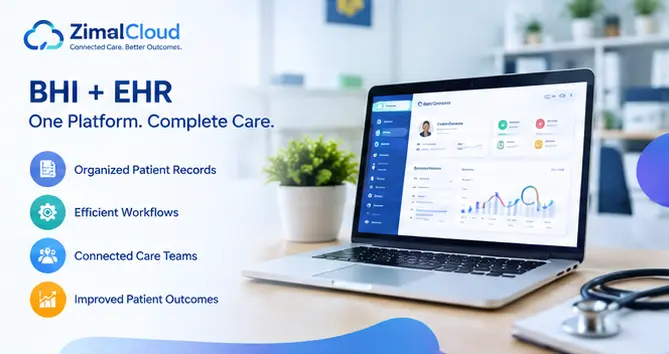
Here are six important benefits.
1. Keep Patient Information More Organized
When behavioral health documentation is maintained separately from other clinical records, authorized team members may need to navigate multiple systems to understand a patient's care history.
An EHR-connected BHI workflow can help organize relevant assessments, care plans, follow-up notes, and review records within a more coordinated environment.
This supports better information visibility for authorized users while helping practices reduce unnecessary duplication.
2. Reduce Administrative Work and Repeated Data Entry
Managing separate applications can require staff to enter similar information more than once, switch between dashboards, and manually track outstanding tasks.
A connected platform can simplify these processes by bringing related workflows together. Depending on the system configuration, teams may be able to manage documentation, care planning, follow-up activities, and review tasks through a more consistent process.
The result can be a smoother administrative workflow and more time available for patient-related responsibilities.
3. Support Coordinated Care Team Communication
Behavioral health services may involve physicians, behavioral health professionals, care coordinators, and other authorized team members.
When relevant information is organized within a shared healthcare environment, team members can work from more consistent documentation and follow established communication and review processes.
Access should always be based on individual roles and applicable privacy requirements. Integration should improve coordination without giving every user unrestricted access to sensitive behavioral health information.
4. Standardize Behavioral Health Documentation
Consistent documentation helps healthcare teams understand what has been assessed, what care is planned, and which follow-up activities remain outstanding.
A structured BHI workflow may include:
- Behavioral health screening and assessment records
- Individualized care plans and documented goals
- Follow-up notes and care coordination activities
- Time tracking where required by the applicable program
- Provider review and electronic signatures
- Reports and records that support operational oversight
Standardized workflows can help practices maintain more complete records and make documentation easier to review.
5. Improve Follow-Up and Workflow Visibility
Behavioral health integration often involves ongoing engagement rather than a single encounter. Practices may need to monitor care plan progress, document outreach, record interventions, and identify tasks requiring further attention.
A connected platform can help staff track these activities through organized workflows and dashboards, subject to the features available in the system.
This makes it easier to identify outstanding documentation and follow-up tasks without relying entirely on disconnected spreadsheets or manual reminders.
6. Support More Consistent Program Oversight
Practice managers need visibility into workflow completion, documentation status, and operational performance.
When BHI activities are managed through a structured platform, authorized users can review relevant records and available reports more efficiently. Consistent documentation and oversight processes can also help practices identify workflow gaps and opportunities for improvement.
Technology can support these processes, but clinical decisions, appropriate supervision, and compliance responsibilities remain with the healthcare organization and its qualified professionals.
The Challenges of Managing BHI Outside Your EHR
A separate behavioral health application may be appropriate for some organizations. However, disconnected systems can introduce avoidable operational challenges when information and workflows do not communicate effectively.
Common challenges include:
- Fragmented records: Relevant information is spread across different applications.
- Repeated data entry: Staff manually transfer information between systems.
- Disconnected care plans: Behavioral health documentation may be difficult to coordinate with broader care activities.
- Manual follow-up tracking: Teams rely on spreadsheets, reminders, or separate task lists.
- Limited workflow visibility: Managers may need to gather information from multiple sources to understand program status.
The goal is not simply to place every function in one application. It is to create a connected workflow that supports the practice's clinical needs, privacy requirements, and operational processes.
How ZimalCloud BHI Supports Connected Behavioral Health Workflows
ZimalCloud provides healthcare technology designed to help practices manage clinical and administrative workflows within a connected platform environment.
Its Behavioral Health Integration (BHI) solution is intended to support structured behavioral health program management, helping teams organize documentation and ongoing care activities.
Key workflow capabilities include:
Structured Care Planning
Organize behavioral health care plans, goals, and relevant documentation in a structured format to support consistent workflows.
Screening and Assessment Support
Maintain screening and assessment records using supported instruments and workflows appropriate to the practice's program.
Follow-Up and Care Coordination
Document outreach, interventions, follow-up activities, and relevant care coordination notes in an organized process.
Time Tracking and Documentation
Record program-related time and maintain supporting documentation where applicable. Practices should verify that their workflows meet the requirements of the specific service and payer.
Provider Review and Sign-Off
Support review processes and electronic signatures where available, helping teams manage documentation and oversight activities.
Connected Healthcare Workflows
Position BHI within a broader healthcare technology environment alongside EHR and practice management workflows, helping reduce operational separation between clinical documentation and administrative processes.
Specific integration behavior, data synchronization, permissions, reporting, and available features should be confirmed against the ZimalCloud configuration selected by the practice.
Why a Connected BHI and EHR Workflow Matters for Practice Efficiency
A well-designed technology workflow should make it easier for healthcare professionals to manage information without adding unnecessary complexity.
Connecting BHI and EHR workflows can help practices:
- Reduce avoidable application switching.
- Improve consistency in clinical documentation.
- Organize care plans and follow-up activities.
- Support collaboration among authorized care team members.
- Improve visibility into outstanding tasks.
- Establish more consistent processes for program oversight.
These benefits depend on implementation quality, staff training, system configuration, and how effectively the platform fits the practice's existing operations.
Security and Privacy Must Remain a Priority
Behavioral health information can be particularly sensitive. Connecting systems should never mean compromising patient confidentiality.
Healthcare practices should evaluate whether their technology supports appropriate role-based access, audit logging, secure information handling, and other safeguards required by applicable laws and organizational policies.
For organizations subject to HIPAA, the platform and its use must be assessed in the context of the applicable HIPAA Privacy, Security, and Breach Notification Rules. Access to behavioral health records should be limited and managed according to relevant legal requirements and legitimate care needs.
Practices should also establish clear policies for staff access, documentation, information sharing, and incident response.
How to Choose the Right BHI Platform
Before selecting a BHI solution, evaluate how well it supports your clinical and administrative requirements.
Consider the following questions:
- Can behavioral health documentation be organized alongside relevant patient records?
- Does the platform support structured care plans, assessments, and follow-up workflows?
- Can authorized team members collaborate without unnecessary duplication?
- Are user permissions and audit capabilities appropriate for sensitive information?
- Does the system support reporting and oversight for your program?
- Can the platform accommodate your practice's workflow and integration requirements?
- Does the vendor clearly explain its security controls, implementation process, and supported features?
A careful evaluation helps ensure that the technology supports actual practice needs rather than adding another disconnected application.
Conclusion: Bring Behavioral Health Workflows Closer to the Patient Record
Behavioral Health Integration is most effective when clinical teams have organized workflows, appropriate access to relevant information, and reliable processes for documentation and follow-up.
Connecting BHI with an EHR can help reduce fragmentation, support care coordination, and simplify administrative processes. The right platform should combine workflow efficiency with strong privacy safeguards and clear clinical oversight.
ZimalCloud BHI offers a way for practices to explore structured behavioral health workflows within a connected healthcare technology environment. By evaluating how BHI fits with EHR and practice management operations, healthcare organizations can take a practical step toward more coordinated and efficient care.