Mental Health Screening: What It Is and Why It Matters
Mental health screening helps healthcare professionals identify possible concerns such as depression, anxiety, and other behavioral health conditions. Learn how screening works, common tools, what results can mean, and why structured documentation and follow-up workflows matter for delivering coordinated, patient-centered care.
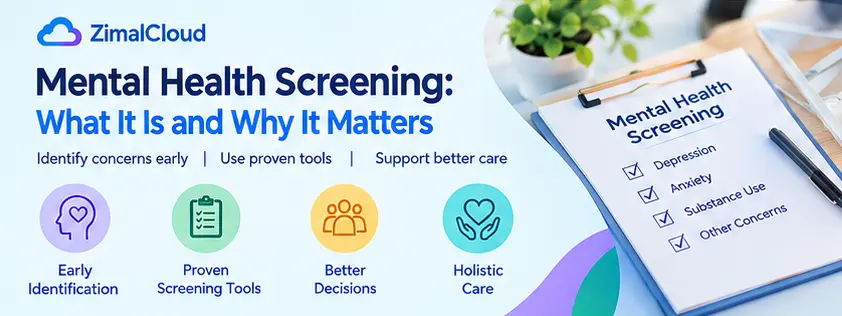
Table of contents
- Introduction
- What Is Mental Health Screening?
- Why Does Mental Health Screening Matter?
- Who May Benefit From Mental Health Screening?
- Common Types of Mental Health Screening
- Depression Screening
- Anxiety Screening
- Substance Use Screening
- Broader Behavioral Health Screening
- What Happens After a Screening?
- Negative or Low-Risk Result
- Positive or Elevated Result
- Mental Health Screening vs. Mental Health Diagnosis
- How Healthcare Practices Can Improve Screening Workflows
- The Role of Technology in Mental Health Screening
- Benefits of a Structured Screening Workflow
- Better Visibility
- More Consistent Processes
- Improved Follow-Up Coordination
- More Connected Care
- Important Considerations
- Conclusion
Introduction
Mental health is an important part of overall health, yet concerns such as anxiety, depression, stress, and other emotional difficulties can sometimes go unnoticed. Mental health screening provides a structured way to identify possible concerns and determine whether a person may benefit from further evaluation.
Screening is not the same as receiving a diagnosis. Instead, it can help healthcare professionals recognize potential concerns earlier and decide whether additional assessment or support may be appropriate.
For medical practices, incorporating appropriate screening into routine care can also create a more consistent process for identifying behavioral and mental health needs.
What Is Mental Health Screening?
Mental health screening is a brief assessment used to identify signs or symptoms that may indicate a mental health concern.
Screening may involve:
- Short questionnaires
- Patient-reported assessments
- Discussions with a healthcare professional
- Review of symptoms and relevant health information
- Follow-up assessments when concerns are identified
Common screening areas include depression, anxiety, substance use, and other behavioral health concerns.
A positive screening result does not automatically mean that someone has a mental health disorder. It indicates that further evaluation may be useful.
Why Does Mental Health Screening Matter?
Mental health concerns can affect sleep, concentration, relationships, work or school performance, physical health, and overall quality of life.
Routine screening can help healthcare teams:
- Identify possible concerns earlier
- Create opportunities for patients to discuss mental health
- Determine whether further assessment is appropriate
- Connect patients with suitable resources or professionals
- Support more comprehensive patient care
- Track symptoms over time when clinically appropriate
Early identification can help healthcare professionals address concerns before they become more difficult to manage.
Who May Benefit From Mental Health Screening?
Screening may be appropriate for many patients depending on their age, symptoms, health history, and clinical circumstances.
Healthcare professionals may consider screening when a patient:
- Reports persistent changes in mood or behavior
- Experiences ongoing stress or anxiety
- Has changes in sleep or daily functioning
- Reports difficulty concentrating
- Has physical symptoms that may be associated with emotional concerns
- Has a relevant personal or family history
- Is receiving care for a condition that may affect mental well-being
Screening practices should follow applicable clinical recommendations and the healthcare professional's judgment.
Common Types of Mental Health Screening
Different screening tools are designed for different concerns. Examples include:
Depression Screening
Depression screening questionnaires can help identify symptoms such as persistent low mood, loss of interest, changes in sleep or appetite, and difficulties with daily functioning.
One commonly used instrument is the Patient Health Questionnaire-9 (PHQ-9).
Anxiety Screening
Anxiety screening may assess symptoms such as excessive worry, nervousness, restlessness, and difficulty controlling worry.
The Generalized Anxiety Disorder-7 (GAD-7) is one commonly used questionnaire.
Substance Use Screening
Some screening tools assess patterns of alcohol or substance use that may warrant further discussion or evaluation.
Broader Behavioral Health Screening
Depending on the healthcare setting and patient population, screening may cover additional behavioral or emotional concerns.
The appropriate tool depends on the patient's circumstances and the purpose of the screening.
What Happens After a Screening?
A screening result should be interpreted in the appropriate clinical context.
Negative or Low-Risk Result
A result that does not indicate significant concerns may simply be documented according to the practice's workflow. Depending on the situation, future screening may still be appropriate.
Positive or Elevated Result
A positive or elevated result may lead to:
- A more detailed clinical conversation
- Additional assessment
- Review of relevant medical and social factors
- Referral to an appropriate behavioral health professional
- Development of a follow-up plan when clinically indicated
The screening result itself should not be treated as a definitive diagnosis.
Mental Health Screening vs. Mental Health Diagnosis
These two processes are different.
| Mental Health Screening | Mental Health Diagnosis |
|---|---|
| Identifies possible concerns | Determines whether diagnostic criteria are met |
| Often uses brief questionnaires | Requires clinical evaluation |
| Can be used as an initial step | Requires appropriate professional assessment |
| Does not establish a diagnosis by itself | May result in a formal diagnosis |
| Helps determine whether follow-up may be needed | Guides diagnosis-specific treatment and care planning |
Understanding this distinction is important for both patients and healthcare teams.
How Healthcare Practices Can Improve Screening Workflows
Effective screening is not only about selecting a questionnaire. Practices also need a reliable workflow for documenting results and managing appropriate follow-up.
A structured workflow may include:
Patient identification → Screening → Documentation → Review → Follow-up → Ongoing monitoring
Healthcare practices can improve consistency by:
- Establishing clear screening procedures
- Using appropriate standardized tools
- Recording screening results in the patient's health record
- Defining follow-up responsibilities
- Maintaining appropriate documentation
- Coordinating behavioral and primary care when appropriate
- Protecting patient privacy and confidentiality
Technology can support these processes by helping teams organize screening information and make relevant documentation easier to access.
The Role of Technology in Mental Health Screening
Digital healthcare platforms can help practices incorporate screening into existing workflows.
Depending on the system, technology may support:
- Digital questionnaires
- Structured screening documentation
- Patient records
- Alerts or workflow notifications
- Follow-up tracking
- Provider review
- Reporting and operational visibility
Technology should support—not replace—clinical judgment. Screening results need to be reviewed and interpreted by appropriately qualified healthcare professionals.
Benefits of a Structured Screening Workflow
A consistent workflow can provide several operational benefits for healthcare organizations.
Better Visibility
Structured documentation can make relevant screening information easier for authorized members of the care team to find.
More Consistent Processes
Defined workflows can reduce variation in how screening is administered and documented.
Improved Follow-Up Coordination
When responsibilities are clearly defined, teams can more easily identify appropriate next steps.
More Connected Care
Integrating behavioral health screening into broader care workflows can help practices consider mental and physical health together.
Important Considerations
Mental health screening should be performed using appropriate tools and within the relevant clinical guidelines and regulations.
Practices should also consider:
- Patient privacy
- Informed participation where applicable
- Appropriate documentation
- Staff training
- Follow-up procedures
- Referral pathways
- Emergency procedures for situations requiring immediate attention
Screening should be part of a broader clinical process rather than treated as an isolated questionnaire.
Conclusion
Mental health screening is an important tool for identifying potential behavioral and emotional health concerns. It can give healthcare professionals an opportunity to recognize symptoms, begin appropriate conversations, and determine whether additional evaluation or support may be needed.
For medical practices, the value of screening extends beyond the questionnaire itself. A well-organized workflow—from screening and documentation through review and follow-up—can help teams provide more coordinated and comprehensive care.