What Is Anxiety? Symptoms, Causes, Types, and Treatment Options
Anxiety is a common response to stress, but persistent or overwhelming worry may indicate an anxiety disorder. Learn about anxiety symptoms, causes, types such as generalized anxiety disorder, panic disorder, and social anxiety, how anxiety is diagnosed, and treatment options including therapy, medication, and healthy lifestyle strategies.
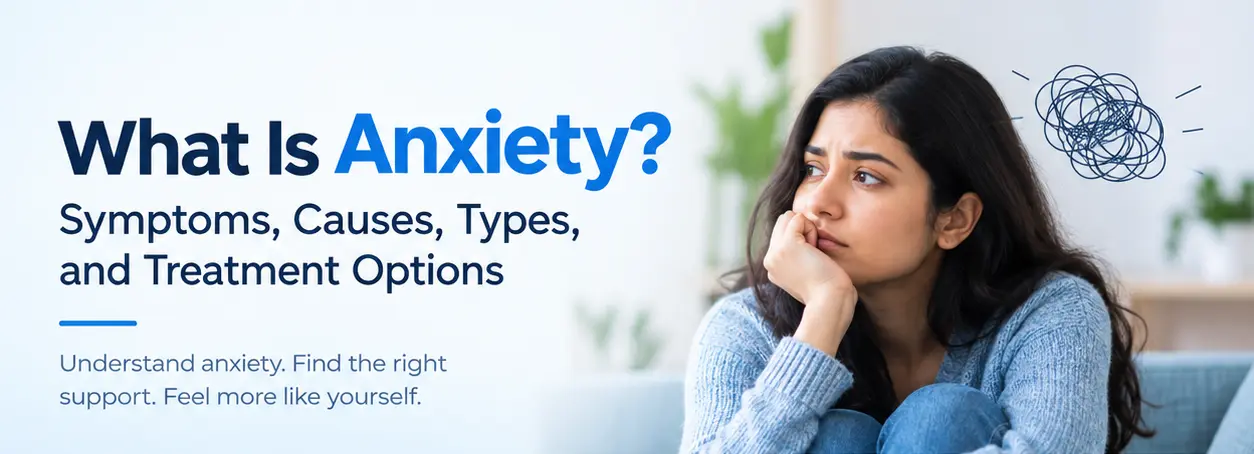
Table of contents
- What Is Anxiety?
- Common Symptoms of Anxiety
- What Causes Anxiety?
- Genetics and Family History
- Brain Chemistry and Biology
- Stressful Life Events
- Medical Conditions
- Types of Anxiety Disorders
- 1. Generalized Anxiety Disorder (GAD)
- 2. Panic Disorder
- 3. Social Anxiety Disorder
- 4. Phobias
- 5. Separation Anxiety Disorder
- 6. Agoraphobia
- Anxiety vs. Normal Stress
- How Is Anxiety Diagnosed?
- Treatment Options for Anxiety
- Psychotherapy
- Medications
- Lifestyle and Self-Care Strategies
- When Should You Seek Help for Anxiety?
- How Healthcare Technology Can Support Anxiety Care
- Final Thoughts
Anxiety is a common emotional response to stress, uncertainty, or perceived danger. Feeling anxious occasionally is normal, but persistent or intense anxiety can interfere with daily life, relationships, work, sleep, and overall well-being.
Understanding anxiety symptoms, causes, types, and treatment options can help people recognize when anxiety may require professional support.
What Is Anxiety?
Anxiety is the body's natural response to stress or a perceived threat. It can trigger physical, emotional, and behavioral reactions that prepare a person to respond to a challenging situation.
For example, it is normal to feel anxious before an important exam, job interview, medical procedure, or major life event.
However, anxiety may become a concern when feelings of fear or worry are persistent, excessive, difficult to control, or disruptive to everyday activities.
Anxiety disorders are among the most common mental health conditions, and different types of anxiety disorders can have different symptoms and treatment approaches.
Common Symptoms of Anxiety
Anxiety can affect both the mind and body. Symptoms can vary from person to person and may range from mild to severe.
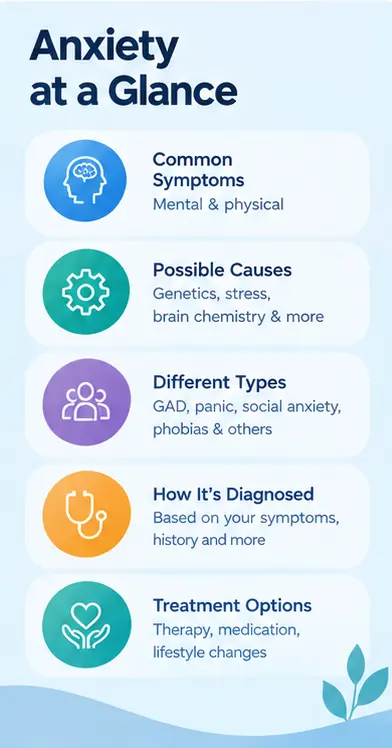
Emotional and Mental Symptoms:
Common psychological symptoms include:
- Excessive or persistent worry
- Feeling restless or on edge
- Irritability
- Difficulty concentrating
- Feeling tense or overwhelmed
- Fear that something bad may happen
- Difficulty controlling worrying thoughts
- Avoiding situations because of fear or anxiety
Physical Symptoms:
Anxiety can also cause physical symptoms such as:
- Rapid heartbeat
- Sweating
- Trembling or shaking
- Muscle tension
- Shortness of breath
- Dizziness
- Fatigue
- Headaches
- Stomach discomfort
- Difficulty sleeping
Not everyone experiences all of these symptoms. Their severity can also change depending on the situation and type of anxiety.
What Causes Anxiety?
There is no single cause of anxiety. It can develop through a combination of genetic, biological, psychological, and environmental factors.
Common contributing factors include:
Genetics and Family History
People with a family history of anxiety disorders or other mental health conditions may have a higher risk of developing anxiety.
Brain Chemistry and Biology
Changes in brain signaling and the body's stress-response systems may contribute to anxiety symptoms.
Stressful Life Events
Major or ongoing stress can contribute to anxiety. Examples include:
- Financial difficulties
- Relationship problems
- Work-related stress
- Bereavement
- Major life changes
- Traumatic experiences
Medical Conditions
Some medical conditions can produce symptoms that resemble anxiety. Certain medications, substances, and stimulants can also contribute to anxiety symptoms.
For this reason, persistent or new anxiety symptoms should be discussed with a qualified healthcare professional.
Types of Anxiety Disorders
Anxiety is not a single condition. Several different anxiety disorders are recognized, each with its own patterns of symptoms.
1. Generalized Anxiety Disorder (GAD)
Generalized anxiety disorder involves excessive and persistent worry about everyday situations. A person may worry frequently about health, finances, work, family, or other responsibilities.
The worry can be difficult to control and may occur even when there is no immediate threat.
2. Panic Disorder
Panic disorder involves recurring, unexpected panic attacks. A panic attack can cause sudden and intense fear along with physical symptoms such as a racing heart, sweating, shaking, dizziness, or shortness of breath.
Some people may also develop fear about having another panic attack.
3. Social Anxiety Disorder
Social anxiety disorder involves significant fear or anxiety in social or performance situations.
A person may worry about being judged, embarrassed, rejected, or negatively evaluated by others. This can lead to avoiding social interactions, meetings, presentations, or other activities.
4. Phobias
A specific phobia involves an intense fear of a particular object or situation.
Examples can include fear of:
- Heights
- Flying
- Certain animals
- Injections
- Enclosed spaces
The fear can be much stronger than the actual level of danger and may lead to avoidance.
5. Separation Anxiety Disorder
Separation anxiety disorder involves excessive fear or distress related to separation from an attachment figure. Although often associated with childhood, it can also occur in adults.
6. Agoraphobia
Agoraphobia involves significant fear or anxiety about situations where escape might feel difficult or help might not be available if panic-like symptoms occur.
A person may avoid certain public places, transportation, crowds, or being outside the home alone.
Anxiety vs. Normal Stress
Feeling anxious does not automatically mean someone has an anxiety disorder.
| Normal Stress or Anxiety | Possible Anxiety Disorder |
|---|---|
| Usually linked to a specific situation | May occur frequently or without an obvious trigger |
| Often improves when the situation ends | May persist over time |
| Usually manageable | Can be difficult to control |
| Limited impact on daily activities | May interfere with work, school, relationships, or sleep |
| May motivate action | May lead to significant avoidance |
The important distinction is often how persistent, intense, and disruptive the anxiety becomes.
How Is Anxiety Diagnosed?
There is no single laboratory test that can diagnose an anxiety disorder.
A healthcare or mental health professional may evaluate:
- Symptoms and their severity
- How long symptoms have been present
- Physical and mental health history
- Medications and substance use
- Family history
- Impact on work, school, relationships, and daily activities
A clinician may also consider whether another medical or mental health condition could be contributing to the symptoms.
Treatment Options for Anxiety
Anxiety treatment depends on the type and severity of symptoms, individual needs, and other health considerations.
Psychotherapy
Psychotherapy, also called talk therapy, is an important treatment option for many anxiety disorders.
Cognitive behavioral therapy (CBT) is commonly used. CBT can help people identify unhelpful thought patterns and develop healthier ways to respond to anxiety.
Other therapeutic approaches may also be appropriate depending on the individual's circumstances.
Medications
Healthcare professionals may recommend medication for some people with anxiety disorders.
Depending on the condition, treatment may involve medications such as certain antidepressants or other medications prescribed by a qualified clinician.
Medication should be taken only under professional guidance, and treatment decisions should be individualized.
Lifestyle and Self-Care Strategies
Lifestyle changes may complement professional treatment.
Helpful strategies can include:
- Maintaining a regular sleep schedule
- Getting regular physical activity
- Practicing relaxation or breathing exercises
- Limiting excessive caffeine
- Avoiding recreational drugs
- Maintaining social connections
- Practicing stress-management techniques
These strategies may support overall well-being but should not replace professional care when an anxiety disorder requires treatment.
When Should You Seek Help for Anxiety?
Consider speaking with a healthcare or mental health professional when anxiety:
- Feels overwhelming or difficult to control
- Continues for an extended period
- Interferes with work, school, relationships, or daily activities
- Causes significant sleep problems
- Leads to persistent avoidance
- Causes frequent panic attacks
- Is accompanied by other concerning physical or emotional symptoms
Seeking help does not mean that anxiety is severe or that something is "wrong" with you. Early support can make it easier to understand symptoms and identify appropriate treatment.
How Healthcare Technology Can Support Anxiety Care
Modern healthcare technology can help providers organize information and coordinate care for patients experiencing anxiety.
Digital healthcare platforms can support:
- Structured behavioral health assessments
- Patient documentation
- Care coordination
- Appointment and follow-up management
- Clinical workflows
- Communication between care teams
- Monitoring of treatment progress
Technology does not replace the relationship between patients and healthcare professionals. Instead, it can help reduce administrative burden and give care teams more time to focus on patients.
Final Thoughts
Anxiety is a common human response to stress, but persistent or excessive anxiety can become a significant health concern. Recognizing anxiety symptoms, causes, and different types of anxiety disorders is an important first step toward getting appropriate support.
Treatment can include psychotherapy, medication, lifestyle strategies, or a combination of approaches. If anxiety is interfering with daily life, speaking with a qualified healthcare professional can help determine the right next steps.
Medical note: This article is for general educational purposes and is not a substitute for professional medical diagnosis or treatment. Anyone experiencing persistent, severe, or concerning symptoms should consult a qualified healthcare professional.