ZimalCloud insights

Ideas that move healthcare practices forward

Practical guidance on care programs, practice operations, healthcare technology, and sustainable growth.

Latest insights

how-healthcare-automation-reduce-denials-card
Healthcare technology

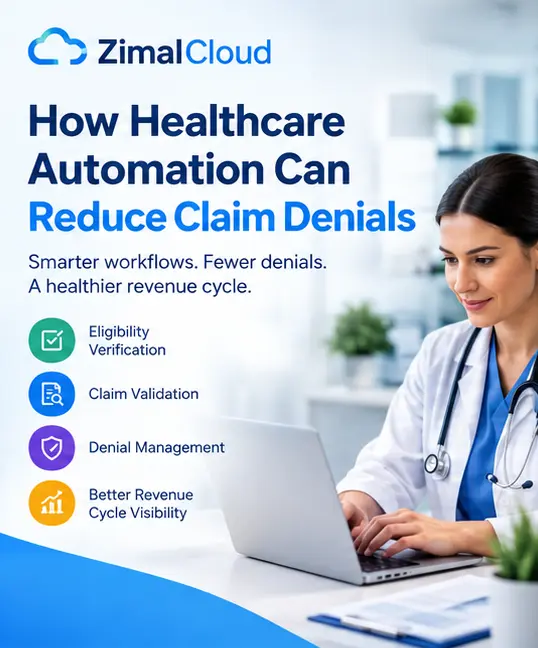
How Healthcare Automation Can Reduce Claim Denials

Healthcare claim denials can increase administrative workload and delay reimbursement. Learn how healthcare automation can help practices identify eligibility issues, missing information, authorization gaps, documentation problems, and claim errors earlier—while improving denial management, follow-up, reporting, and revenue-cycle visibility.

Read insight
common-gi-cpt-codes-biller-know-card
Gastroenterology

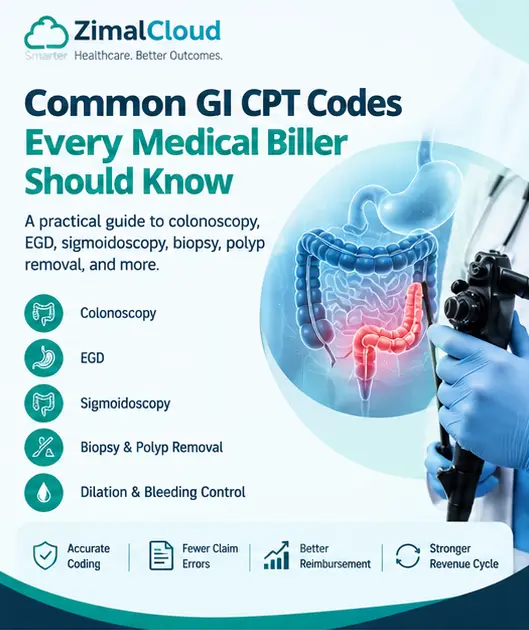
Common GI CPT Codes Every Medical Biller Should Know

Common GI CPT codes can be challenging for medical billers to navigate. This guide explains frequently encountered colonoscopy, EGD, flexible sigmoidoscopy, biopsy, polyp removal, dilation, and bleeding-control codes, along with common billing mistakes and a practical workflow for connecting documentation, coding, claims, and payment.

Read insight
modern-pm-reduces-administrative-work-card
Healthcare technology

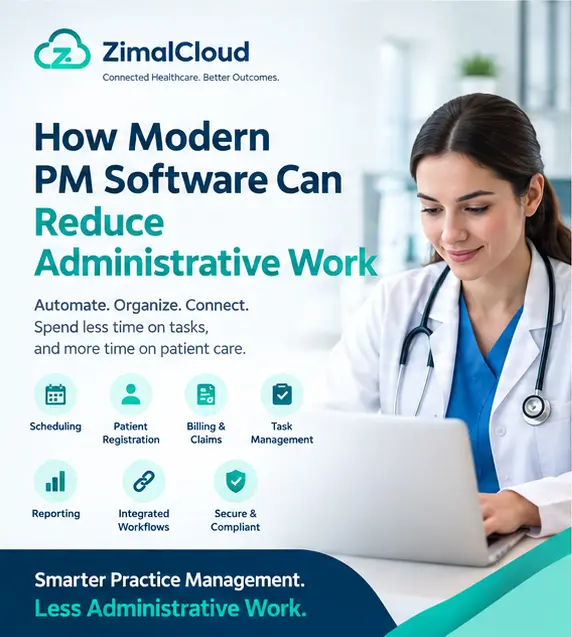
How Modern PM Software Can Reduce Administrative Work

Modern practice management software can reduce administrative work by streamlining scheduling, registration, billing, claims, task management, reporting, and patient workflows. By connecting information and automating repetitive processes, PM software helps physicians, practice managers, and staff spend less time on manual tasks and more time managing efficient, organized healthcare operations.

Read insight
cloud-based-practice-management-software-benefits-card
Healthcare technology

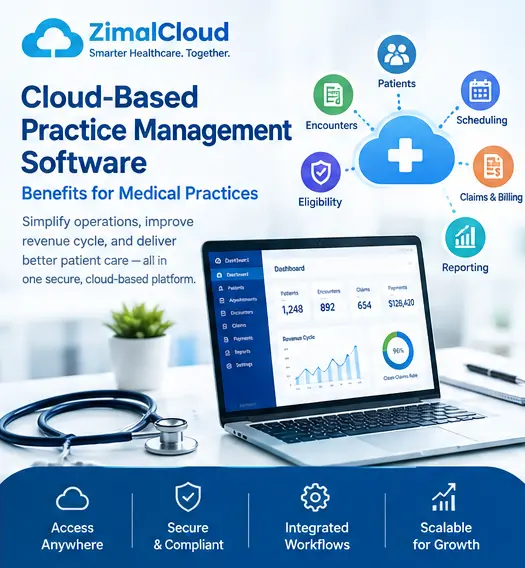
Cloud-Based Practice Management Software Benefits of Medical Practice

Cloud-based practice management software helps medical practices manage patients, appointments, eligibility, encounters, coding, claims, payments, and reporting in one centralized system. With remote access, role-based workflows, integrations, and real-time visibility, cloud technology can simplify daily operations, support growing practices, and improve coordination b/w clinical, administration.

Read insight
patients-qualify-ccm-guide-providers-card
Care management

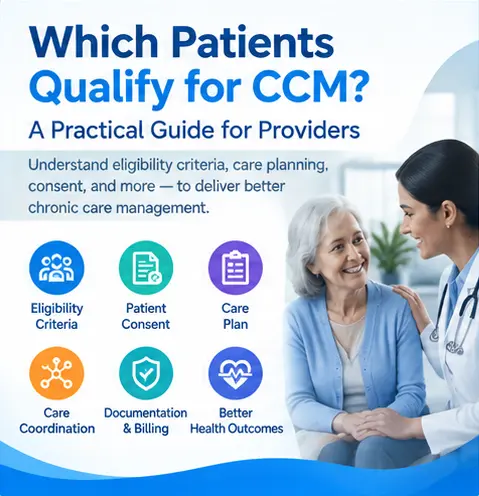
Which Patients Qualify for CCM? A Practical Guide for Providers

Which patients qualify for Chronic Care Management (CCM)? Learn the key Medicare eligibility criteria, including having two or more qualifying chronic conditions expected to last at least 12 months and creating a comprehensive care plan. This practical guide also explains consent, initiating visits, care coordination, documentation, and important considerations for providers.

Read insight
capturing-every-eligible-ccm-patient-card
Care management

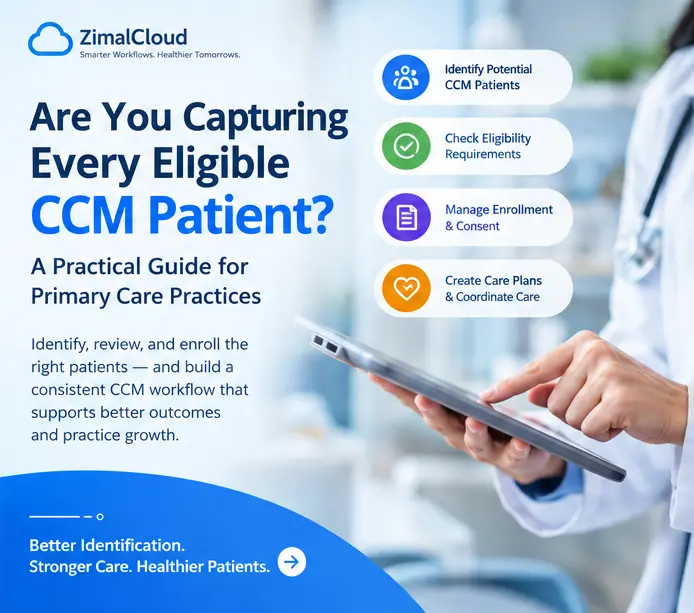
Are You Capturing Every Eligible CCM Patient? A Practical Guide for Primary Care Practices

Are you identifying every patient who may qualify for Chronic Care Management? This practical guide explains how primary care practices can systematically identify potential CCM patients, review eligibility, manage enrollment, build care plans, and create a consistent workflow that supports coordinated chronic care while reducing missed opportunities and administrative gaps.

Read insight
healthcare-data-exchange-practices-card
Healthcare technology

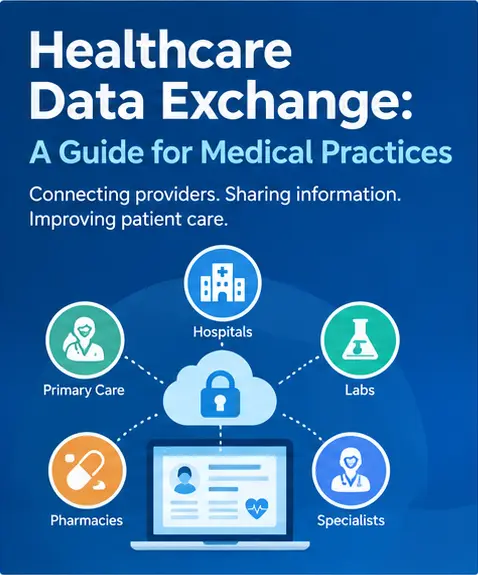
Healthcare Data Exchange: A Guide for Medical Practices

Healthcare data exchange enables medical practices to securely share patient information between EHRs, laboratories, pharmacies, hospitals, and other healthcare providers. This guide explains how healthcare data exchange works, its benefits, common challenges, interoperability standards, security considerations, and practical steps practices can take to improve coordinated, and efficient.

Read insight
stress-anxiety-difference-card

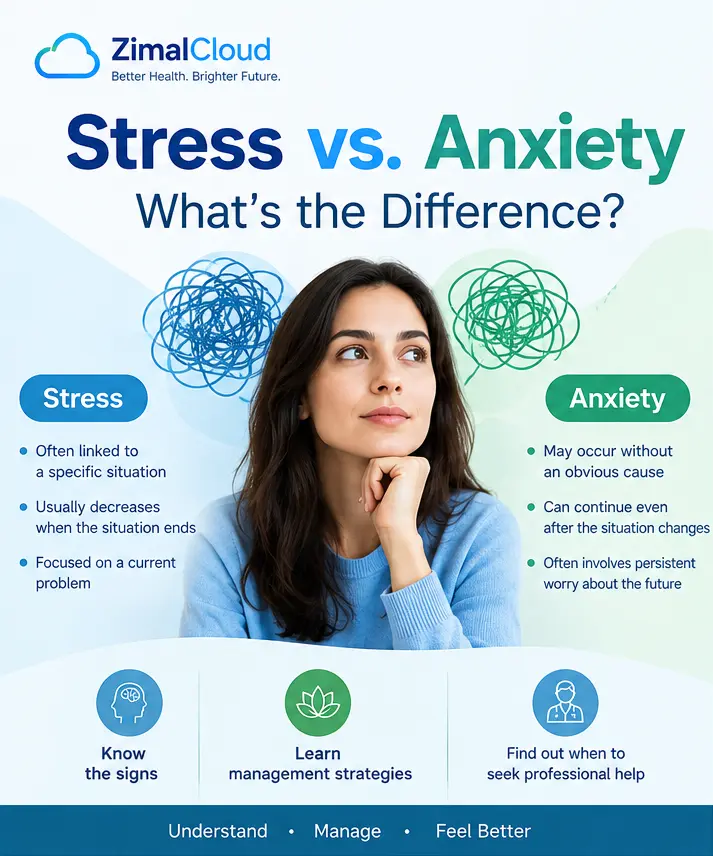
Stress vs. Anxiety: What's the Difference?

Stress and anxiety can feel similar, but they are not the same. Stress is usually a response to a specific challenge and may improve when the situation ends. Anxiety involves persistent worry or fear that may continue even without an immediate stressor. Learn the key differences, common symptoms, management strategies, and when professional support may help.

Read insight