Stress vs. Anxiety: What's the Difference?
Stress and anxiety can feel similar, but they are not the same. Stress is usually a response to a specific challenge and may improve when the situation ends. Anxiety involves persistent worry or fear that may continue even without an immediate stressor. Learn the key differences, common symptoms, management strategies, and when professional support may help.
Table of contents
- Stress vs. Anxiety: What's the Difference?
- What Is Stress?
- Common Signs of Stress
- What Is Anxiety?
- Common Signs of Anxiety
- Stress vs. Anxiety: Key Differences
- Can Stress Cause Anxiety?
- How Are Stress and Anxiety Managed?
- 1. Identify Stress Triggers
- 2. Practice Healthy Daily Habits
- 3. Use Relaxation Techniques
- 4. Consider Professional Support
- When Should You Seek Help?
- Stress and Anxiety Can Be Managed
Stress vs. Anxiety: What's the Difference?
Stress and anxiety are common experiences that can affect how people think, feel, and function every day. Although the two can feel similar, stress and anxiety are not exactly the same. Understanding the difference can help people recognize what they are experiencing and know when it may be helpful to seek professional support.
What Is Stress?
Stress is the body's natural response to a challenge, demand, or pressure. It can happen when a person faces a difficult situation, such as work deadlines, financial concerns, relationship problems, exams, or major life changes.
Stress is often connected to a specific situation. Once the stressful situation is resolved or removed, stress may decrease.
Common Signs of Stress
Stress can affect both the body and mind. Common symptoms include:
- Headaches or muscle tension
- Trouble sleeping
- Feeling overwhelmed or irritable
- Difficulty concentrating
- Changes in appetite
- Fatigue or low energy
- Increased heart rate
- Feeling restless or on edge
Short-term stress can sometimes help a person stay focused and respond to challenges. However, prolonged or severe stress can interfere with daily life and overall well-being.
What Is Anxiety?
Anxiety involves excessive or persistent worry, fear, or apprehension. Unlike ordinary stress, anxiety may continue even when there is no immediate threat or clear problem causing it.
Everyone experiences occasional worry. Anxiety becomes more concerning when symptoms are persistent, difficult to control, or interfere with work, relationships, sleep, or other daily activities.
Common Signs of Anxiety
Anxiety may cause emotional, cognitive, and physical symptoms such as:
- Excessive or persistent worry
- Feeling nervous or fearful
- Restlessness
- Difficulty concentrating
- Racing thoughts
- Muscle tension
- Rapid heartbeat
- Sweating or trembling
- Sleep problems
- Avoiding certain situations because of fear
Anxiety can occur on its own or as part of an anxiety disorder. A qualified healthcare professional can help determine whether symptoms may meet the criteria for a specific condition.
Stress vs. Anxiety: Key Differences
| Stress | Anxiety |
|---|---|
| Often linked to a specific challenge or situation | May occur without an obvious immediate cause |
| Usually decreases when the stressful situation ends | Can continue even after a situation has changed |
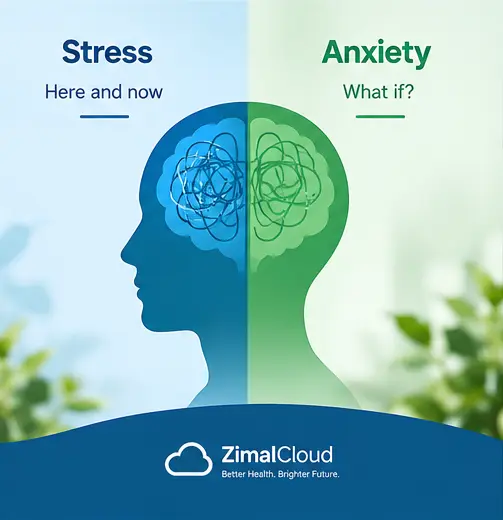
| Often focuses on a current problem | May involve persistent worry about possible future events |
| Can be a normal response to everyday challenges | Persistent or severe anxiety may require professional evaluation |
| Symptoms often improve when the stressor is resolved | Symptoms may continue or return over time |
Stress and anxiety can also occur together. For example, ongoing work-related stress may contribute to persistent worry and anxiety symptoms.
Can Stress Cause Anxiety?
Stress and anxiety are closely related, but stress does not automatically mean a person has an anxiety disorder.
Repeated or prolonged stress may contribute to increased worry, emotional exhaustion, sleep difficulties, and other symptoms that can overlap with anxiety. If anxiety symptoms continue after a stressful situation has passed or begin interfering with everyday life, talking with a healthcare professional may be appropriate.
How Are Stress and Anxiety Managed?
Management depends on the person's symptoms, circumstances, and overall health.
1. Identify Stress Triggers
Recognizing situations, thoughts, or habits that contribute to stress can help a person develop practical strategies for managing them.
2. Practice Healthy Daily Habits
Helpful habits may include:
- Maintaining a regular sleep schedule
- Eating balanced meals
- Staying physically active
- Taking regular breaks
- Limiting excessive caffeine
- Making time for enjoyable activities
- Staying connected with supportive people
3. Use Relaxation Techniques
Breathing exercises, mindfulness, meditation, and other relaxation techniques may help reduce feelings of tension and promote calm.
4. Consider Professional Support
A healthcare professional or mental health professional can help evaluate persistent symptoms and discuss appropriate treatment options. Depending on the situation, treatment may include psychotherapy, lifestyle strategies, medication, or a combination of approaches.
When Should You Seek Help?
Consider speaking with a healthcare professional when stress or anxiety:
- Continues for an extended period
- Interferes with work, school, relationships, or daily activities
- Makes it difficult to sleep
- Causes significant physical or emotional distress
- Leads to avoidance of everyday activities
- Becomes difficult to manage on your own
If someone is experiencing a mental health emergency or feels at immediate risk of harming themselves or someone else, they should seek urgent professional or emergency assistance.
Stress and Anxiety Can Be Managed
Stress and anxiety can share many symptoms, but they are different experiences. Stress is commonly connected to an identifiable challenge, while anxiety can persist or occur without an immediate stressor. Recognizing the difference can help people understand their symptoms and seek appropriate support when needed.
If symptoms are persistent, severe, or affecting everyday life, a healthcare professional can provide an individualized evaluation and guidance.
Medical note: This article provides general educational information and is not a substitute for professional medical diagnosis or treatment.