ADHD in Adults: Symptoms, Diagnosis, and Treatment
ADHD in adults can affect attention, organization, time management, relationships, and daily responsibilities. Learn how adult ADHD symptoms may appear, how professionals diagnose the condition, and how medication, psychotherapy, behavioral strategies, and lifestyle changes can help adults manage symptoms and improve everyday functioning.
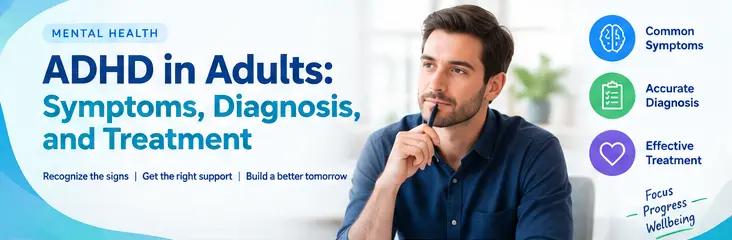
Table of contents
- ADHD in Adults: Symptoms, Diagnosis, and Treatment
- What Is ADHD in Adults?
- Common Symptoms of ADHD in Adults
- 1. Inattention
- 2. Hyperactivity
- 3. Impulsivity
- How ADHD Can Affect Adult Life
- Work and Career
- Relationships
- Daily Responsibilities
- How Is ADHD Diagnosed in Adults?
- Why Can Adult ADHD Be Diagnosed Later in Life?
- Conditions That Can Look Like ADHD
- ADHD Treatment for Adults
- Medication
- Psychotherapy
- Lifestyle and Behavioral Strategies
- Can ADHD Be Managed Successfully?
- When Should an Adult Seek an ADHD Evaluation?
- Final Thoughts
ADHD in Adults: Symptoms, Diagnosis, and Treatment
Attention-deficit/hyperactivity disorder (ADHD) is a neurodevelopmental disorder that can continue from childhood into adulthood. Although ADHD is often associated with children, many adults experience symptoms that can affect work, relationships, organization, time management, and everyday responsibilities.
Adult ADHD does not look exactly the same for everyone. Some adults primarily experience difficulty with attention and organization, while others experience restlessness and impulsivity. Some have a combination of symptoms.
Understanding the signs, receiving an appropriate evaluation, and finding the right treatment approach can help adults manage symptoms and improve daily functioning.
What Is ADHD in Adults?
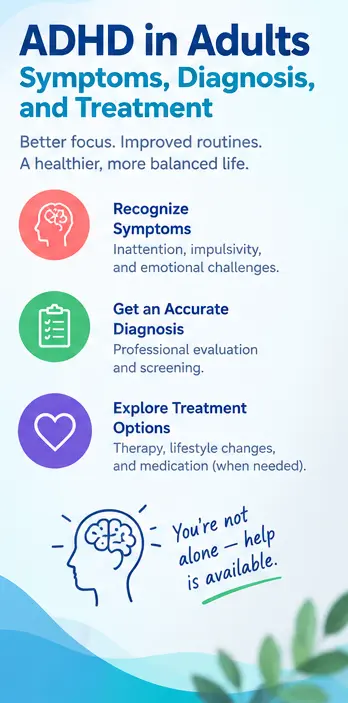
ADHD is characterized by persistent patterns of inattention, hyperactivity, and/or impulsivity that interfere with everyday functioning.
Adults with ADHD may have difficulty:
- Staying focused on tasks
- Organizing work or personal responsibilities
- Managing time and deadlines
- Completing lengthy or repetitive tasks
- Remembering appointments and daily responsibilities
- Controlling impulsive behaviors
- Sitting still or managing feelings of restlessness
- Following instructions or completing projects
- Maintaining consistent routines
ADHD symptoms must be persistent and significant enough to interfere with functioning. Having occasional difficulty concentrating or feeling restless does not necessarily mean that someone has ADHD.
Common Symptoms of ADHD in Adults
Adult ADHD symptoms generally fall into three areas: inattention, hyperactivity, and impulsivity.
1. Inattention
Adults with predominantly inattentive symptoms may:
- Become easily distracted
- Have difficulty paying attention to details
- Make careless mistakes
- Struggle to finish tasks
- Frequently lose items
- Forget appointments or responsibilities
- Have difficulty organizing activities
- Procrastinate on large or uninteresting tasks
- Struggle with time management
- Have difficulty following through on instructions
These challenges can affect professional responsibilities, household tasks, relationships, and personal goals.
2. Hyperactivity
Hyperactivity can look different in adults than it does in children. Instead of obvious physical activity, adults may experience an internal sense of restlessness.
Possible signs include:
- Feeling unable to relax
- Frequently fidgeting
- Talking excessively
- Difficulty participating in quiet activities
- Feeling the need to stay constantly busy
- Becoming uncomfortable when required to sit for long periods
Hyperactivity may become less obvious with age, while feelings of restlessness can continue.
3. Impulsivity
Impulsivity may involve:
- Interrupting conversations
- Answering before someone finishes speaking
- Making decisions without considering consequences
- Difficulty waiting
- Acting on immediate rewards
- Spending or making other decisions impulsively
- Having difficulty controlling reactions
The severity and combination of symptoms vary from person to person.
How ADHD Can Affect Adult Life
Untreated or inadequately managed ADHD can create challenges across different areas of life.
Work and Career
Adults may struggle with:
- Meeting deadlines
- Prioritizing tasks
- Managing multiple projects
- Staying organized
- Maintaining attention during meetings
- Completing routine work
- Avoiding distractions
These difficulties do not necessarily reflect a lack of ability or motivation. ADHD-related executive-function challenges can make certain tasks more difficult.
Relationships
ADHD symptoms can sometimes affect relationships through forgetfulness, interruptions, impulsive communication, difficulty listening, or inconsistent follow-through.
Understanding the condition and improving communication strategies can help individuals and their partners address these challenges.
Daily Responsibilities
Managing bills, appointments, household tasks, schedules, exercise, sleep routines, and other responsibilities can also become difficult when attention and organization are affected.
How Is ADHD Diagnosed in Adults?
There is no single test that can diagnose ADHD.
A healthcare provider typically conducts a comprehensive evaluation that may include:
- Clinical interviews
- ADHD symptom checklists
- Standardized rating scales
- Medical and mental-health history
- Review of childhood behavior and school experiences
- Assessment of current functioning
- Information from family members, partners, or other people who know the individual, when appropriate
For an adult ADHD diagnosis, symptoms must have begun during childhood, before age 12. For adults and adolescents older than 16, diagnostic criteria require at least five symptoms of inattention and/or hyperactivity-impulsivity, depending on the presentation. Symptoms must also persist for at least six months, occur in two or more settings, and interfere with social, academic, or occupational functioning.
Why Can Adult ADHD Be Diagnosed Later in Life?
Some people reach adulthood without receiving an ADHD diagnosis.
This may happen because symptoms were mild, were not recognized during childhood, or were compensated for by supportive environments and personal strategies. Increasing demands from higher education, careers, relationships, or family responsibilities can make previously manageable difficulties more noticeable.
Women and girls may also have been overlooked during childhood when inattentive symptoms were more prominent and less disruptive.
Conditions That Can Look Like ADHD
Several other conditions can cause symptoms similar to ADHD.
A healthcare professional may consider conditions such as:
- Anxiety
- Depression
- Sleep disorders
- Substance or alcohol misuse
- Learning disabilities
- Other medical or psychological conditions
This is one reason professional evaluation is important. A person should not assume that difficulty concentrating automatically means they have ADHD.
ADHD Treatment for Adults
ADHD can be managed with appropriate treatment and ongoing support. Treatment is individualized because different people may respond differently to medications, therapy, behavioral strategies, and lifestyle changes.
Medication
Medication is one of the most common treatments for adult ADHD.
Stimulant medications are commonly used and can be effective in reducing ADHD symptoms. Healthcare providers may also consider non-stimulant treatment options in appropriate situations.
Medication should be prescribed and monitored by a qualified healthcare professional because side effects, interactions, medical history, and individual response need to be considered.
Psychotherapy
Psychotherapy can help adults develop practical strategies for managing ADHD-related challenges.
Cognitive behavioral therapy (CBT) and other behavioral approaches may help with:
- Organization
- Time management
- Procrastination
- Emotional regulation
- Coping strategies
- Managing daily responsibilities
Therapy may be particularly useful when ADHD occurs alongside conditions such as anxiety or depression.
Lifestyle and Behavioral Strategies
Some adults benefit from practical changes such as:
- Using calendars and reminders
- Breaking large tasks into smaller steps
- Creating consistent routines
- Reducing distractions
- Using written task lists
- Scheduling regular physical activity
- Maintaining healthy sleep habits
- Using organizational tools
These strategies are generally used as part of a broader treatment plan rather than as a replacement for professional care when treatment is needed.
Can ADHD Be Managed Successfully?
Yes. While there is currently no cure for ADHD, treatment can reduce symptoms and improve functioning.
Many adults benefit from a combination of medication, psychotherapy, behavioral strategies, organizational techniques, and ongoing professional support. Treatment may require adjustment over time based on symptoms, goals, side effects, and changing life circumstances.
When Should an Adult Seek an ADHD Evaluation?
Consider discussing ADHD with a healthcare professional if ongoing problems with attention, organization, impulsivity, restlessness, or time management are significantly affecting work, relationships, education, or everyday life.
A professional evaluation can help determine whether ADHD is present and whether another condition may better explain the symptoms.
Final Thoughts
ADHD in adults can affect much more than concentration. Symptoms may influence organization, productivity, relationships, time management, and everyday responsibilities.
Recognizing persistent patterns, obtaining an accurate professional evaluation, and developing an individualized treatment plan can help adults manage ADHD and improve daily functioning.
Important: This article is for educational purposes and does not replace diagnosis or treatment from a qualified healthcare professional. If you are concerned about ADHD symptoms, speak with a healthcare provider or qualified mental-health professional.
FAQ
Frequently asked questions
Can adults have ADHD?
Yes. ADHD can continue from childhood into adulthood. Some adults are diagnosed later in life because symptoms were not recognized earlier or became more noticeable as work, family, and other responsibilities increased.
What are the common symptoms of ADHD in adults?
Common symptoms of adult ADHD can include difficulty paying attention, forgetfulness, disorganization, procrastination, poor time management, restlessness, impulsivity, difficulty completing tasks, and problems maintaining consistent routines.
How is ADHD diagnosed in adults?
Adult ADHD is diagnosed through a comprehensive professional evaluation. This may include clinical interviews, symptom checklists, rating scales, medical and mental health history, assessment of current functioning, and information about symptoms during childhood.
Can ADHD be diagnosed for the first time in adulthood?
Yes. Adults can receive an ADHD diagnosis, although the evaluation needs to establish that relevant symptoms were present during childhood, generally before age 12, and that they cause significant impairment in everyday functioning.
What conditions can look similar to ADHD?
Several conditions can cause symptoms similar to ADHD, including anxiety, depression, sleep disorders, substance or alcohol misuse, learning difficulties, and some medical or psychological conditions. A professional evaluation can help determine the underlying cause.
What treatments are available for adult ADHD?
Treatment for adult ADHD may include medication, psychotherapy, behavioral strategies, organizational techniques, and lifestyle changes. The appropriate treatment plan depends on the individual's symptoms, needs, medical history, and treatment goals.
Can psychotherapy help adults with ADHD?
Yes. Psychotherapy and behavioral approaches can help adults develop practical strategies for organization, time management, procrastination, emotional regulation, and coping with ADHD-related challenges.
Can medication help adults with ADHD?
Medication can help reduce ADHD symptoms for many adults. Stimulant and non-stimulant medications may be considered by qualified healthcare professionals depending on the individual's circumstances. Medication should be prescribed and monitored by an appropriate healthcare provider.
Can adults manage ADHD successfully?
Yes. Although there is currently no cure for ADHD, appropriate treatment and support can reduce symptoms and improve daily functioning. Many adults benefit from a combination of medication, psychotherapy, behavioral strategies, organizational tools, and ongoing professional support.
When should an adult seek an ADHD evaluation?
An adult may consider an ADHD evaluation when persistent difficulties with attention, organization, impulsivity, restlessness, time management, or task completion significantly affect work, education, relationships, or everyday responsibilities.