What Is Principal Care Management (PCM)?
Principal Care Management (PCM) provides focused, ongoing support for patients with a single complex chronic condition. Through personalized care plans, regular monitoring, patient communication, and care coordination, PCM helps healthcare teams manage disease more proactively, improve continuity of care, and support better patient outcomes between routine appointments
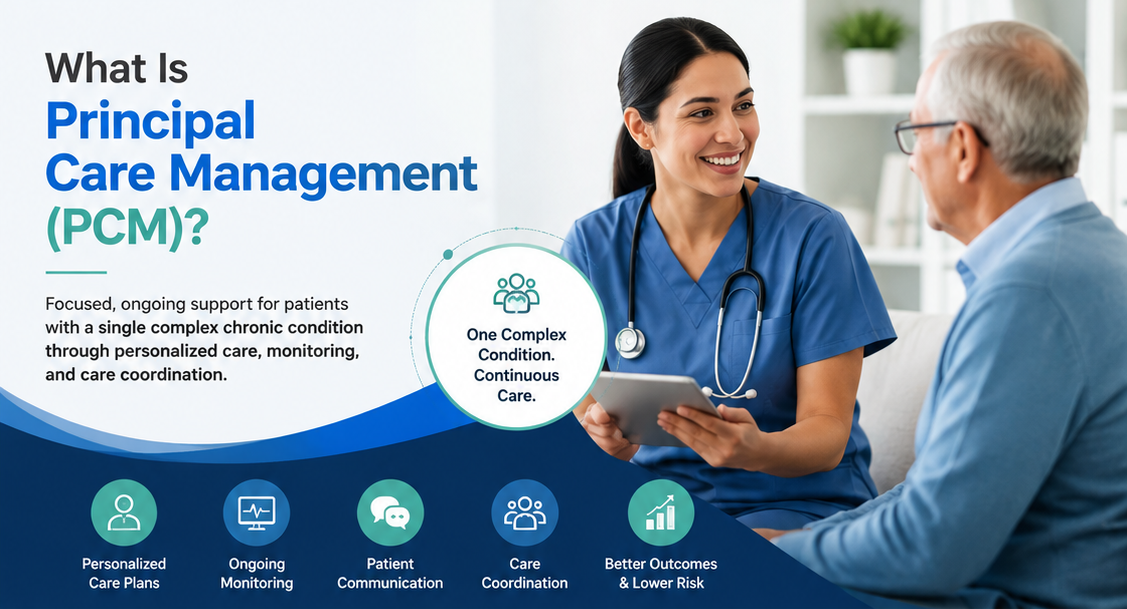
Table of contents
- What Is Principal Care Management?
- How Does PCM Work?
- Who Can Benefit From PCM?
- PCM vs. Chronic Care Management (CCM)
- Key Benefits of Principal Care Management
- Better Continuity of Care
- Earlier Identification of Problems
- Improved Care Coordination
- Better Medication Management
- Patient Education and Engagement
- More Organized Chronic Disease Management
- What Does a PCM Care Plan Include?
- PCM and Technology
- PCM Billing and Documentation
- Challenges in Implementing PCM
- Best Practices for a Successful PCM Program
- 1. Build Clear Eligibility Criteria
- 2. Establish a Dedicated Workflow
- 3. Personalize the Care Plan
- 4. Keep Patients Engaged
- 5. Coordinate With Specialists
- 6. Maintain Strong Documentation
- 7. Use Technology Strategically
- The Future of Principal Care Management
Principal Care Management (PCM) is a Medicare care management service designed for patients with a single complex chronic condition that requires ongoing monitoring, care coordination, and disease-specific management. PCM helps healthcare providers stay actively involved between office visits, supporting better outcomes while helping patients manage conditions more effectively.
What Is Principal Care Management?
Managing a complex chronic condition often requires more than occasional appointments. Patients may need medication adjustments, symptom monitoring, specialist coordination, education, and regular follow-up.
Principal Care Management (PCM) provides a structured approach to managing one serious or complex chronic condition. It allows eligible healthcare professionals and clinical staff to monitor patients, coordinate treatment, and respond to changes in their condition between routine visits.
Unlike broader care management programs that may address multiple chronic conditions, PCM focuses primarily on one complex chronic condition that is expected to last at least three months and requires significant management.
How Does PCM Work?
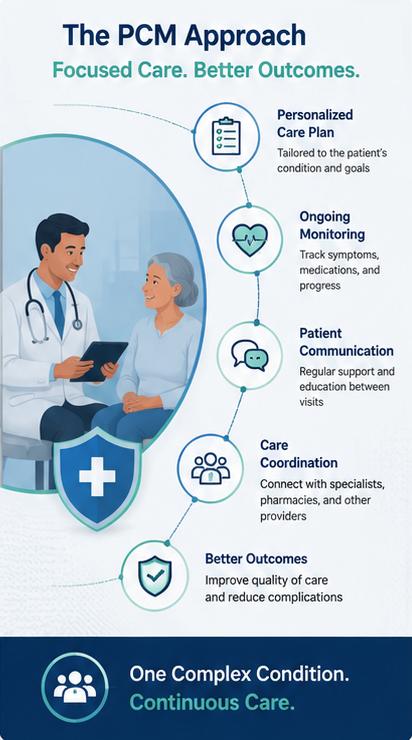
PCM creates an ongoing connection between the patient and their care team.
A typical PCM workflow includes:
1. Patient Identification
The care team identifies patients with an eligible complex chronic condition who may benefit from ongoing management.
2. Care Plan Development
The provider establishes a personalized care plan based on the patient's condition, treatment goals, medications, and clinical needs.
3. Ongoing Monitoring
Clinical staff monitor symptoms, treatment progress, medications, and other relevant health information.
4. Patient Communication
Patients receive regular support, education, and guidance between in-person or virtual appointments.
5. Care Coordination
The care team coordinates with specialists, pharmacies, hospitals, and other healthcare professionals when necessary.
6. Treatment Adjustment
When the patient's condition changes, the care team can communicate with the patient and provider to help determine appropriate next steps.
Who Can Benefit From PCM?
PCM may be appropriate for patients who have:
- A single complex chronic condition
- A condition requiring frequent or intensive management
- A condition expected to last at least three months
- Significant risk of complications or worsening health
- Ongoing medication or treatment needs
- A need for regular communication with their care team
Examples may include complex conditions such as heart failure, COPD, diabetes with significant complications, or other serious chronic diseases, depending on the patient's individual circumstances and Medicare requirements.
PCM is not simply about having a chronic disease. The condition must meet the applicable eligibility and medical-necessity requirements.
PCM vs. Chronic Care Management (CCM)
PCM and Chronic Care Management (CCM) are both Medicare care management services, but they serve different patient needs.
| Feature | PCM | CCM |
|---|---|---|
| Primary focus | One complex chronic condition | Multiple chronic conditions |
| Care approach | Disease-specific management | Comprehensive chronic care |
| Patient needs | Complex, intensive management | Ongoing management of multiple conditions |
| Care coordination | Condition-focused | Broader across chronic conditions |
| Goal | Improve management of the principal condition | Coordinate overall chronic care |
The right program depends on the patient's clinical situation and applicable Medicare requirements.
Key Benefits of Principal Care Management
Better Continuity of Care
PCM keeps the care team engaged beyond the traditional office visit, helping patients receive more consistent support.
Earlier Identification of Problems
Regular monitoring can help the care team recognize changes in symptoms or treatment needs before they become more serious.
Improved Care Coordination
PCM can help connect primary care providers, specialists, clinical staff, pharmacies, and patients around the management of one complex condition.
Better Medication Management
Ongoing communication provides opportunities to identify medication-related concerns, reinforce adherence, and communicate changes to the appropriate provider.
Patient Education and Engagement
Patients can receive practical education about their condition, treatment plan, medications, and warning signs that require attention.
More Organized Chronic Disease Management
A structured PCM workflow gives healthcare organizations a repeatable way to manage patients who require intensive disease-specific attention.
What Does a PCM Care Plan Include?
A comprehensive care plan may include:
- The patient's primary chronic condition
- Treatment goals
- Current medications
- Recommended interventions
- Monitoring requirements
- Follow-up activities
- Patient education
- Communication preferences
- Coordination with specialists
- Actions to take when the patient's condition changes
The care plan should be individualized and regularly updated as the patient's clinical needs evolve.
PCM and Technology
Technology can make PCM workflows more efficient for healthcare organizations.
A PCM platform may help care teams:
- Track patient enrollment
- Document care management activities
- Schedule follow-ups
- Monitor patient information
- Manage care plans
- Record patient communications
- Coordinate tasks among clinical staff
- Maintain documentation for billing
- Identify patients who may require additional attention
When integrated with an electronic health record (EHR), technology can reduce manual work and help clinical teams maintain a more complete view of the patient's care.
PCM Billing and Documentation
PCM services are associated with specific CPT codes and Medicare billing requirements. Healthcare organizations should verify current CMS requirements, patient eligibility, applicable consent requirements, time requirements, documentation standards, and whether services can be billed alongside other care management services.
Accurate documentation is particularly important. Records should clearly support the patient's eligibility, care plan, services provided, clinical work performed, and ongoing management of the qualifying condition.
Because Medicare coding and reimbursement policies can change, practices should always verify the current CMS guidance and applicable payer requirements before billing PCM services.
Challenges in Implementing PCM
Although PCM can provide significant value, healthcare organizations may face challenges such as:
- Identifying eligible patients
- Maintaining consistent patient engagement
- Coordinating responsibilities across staff
- Documenting services accurately
- Managing communication between providers
- Integrating PCM into existing workflows
- Tracking billing requirements
- Protecting patient health information
A clearly defined workflow and appropriate technology can help reduce these challenges.
Best Practices for a Successful PCM Program
Healthcare organizations can strengthen their PCM programs by:
1. Build Clear Eligibility Criteria
Create a consistent process for identifying patients who may qualify.
2. Establish a Dedicated Workflow
Define who handles enrollment, monitoring, communication, documentation, and escalation.
3. Personalize the Care Plan
Avoid a one-size-fits-all approach. Care plans should reflect the patient's condition and goals.
4. Keep Patients Engaged
Use regular communication and simple educational materials to encourage participation.
5. Coordinate With Specialists
Maintain communication between the patient's care team and relevant specialists.
6. Maintain Strong Documentation
Document clinical activities and care management work consistently.
7. Use Technology Strategically
Automation, EHR integration, task management, and patient communication tools can help teams manage PCM at scale.
The Future of Principal Care Management
As healthcare continues moving toward value-based and proactive care, PCM can play an important role in managing patients with complex chronic conditions.
The future of PCM is likely to involve greater use of connected health technologies, remote monitoring, automated patient outreach, analytics, and AI-assisted workflows. These technologies can help care teams identify changes earlier and spend more time on meaningful patient interactions.
However, technology should support—not replace—the clinical judgment and patient relationships at the center of care management.